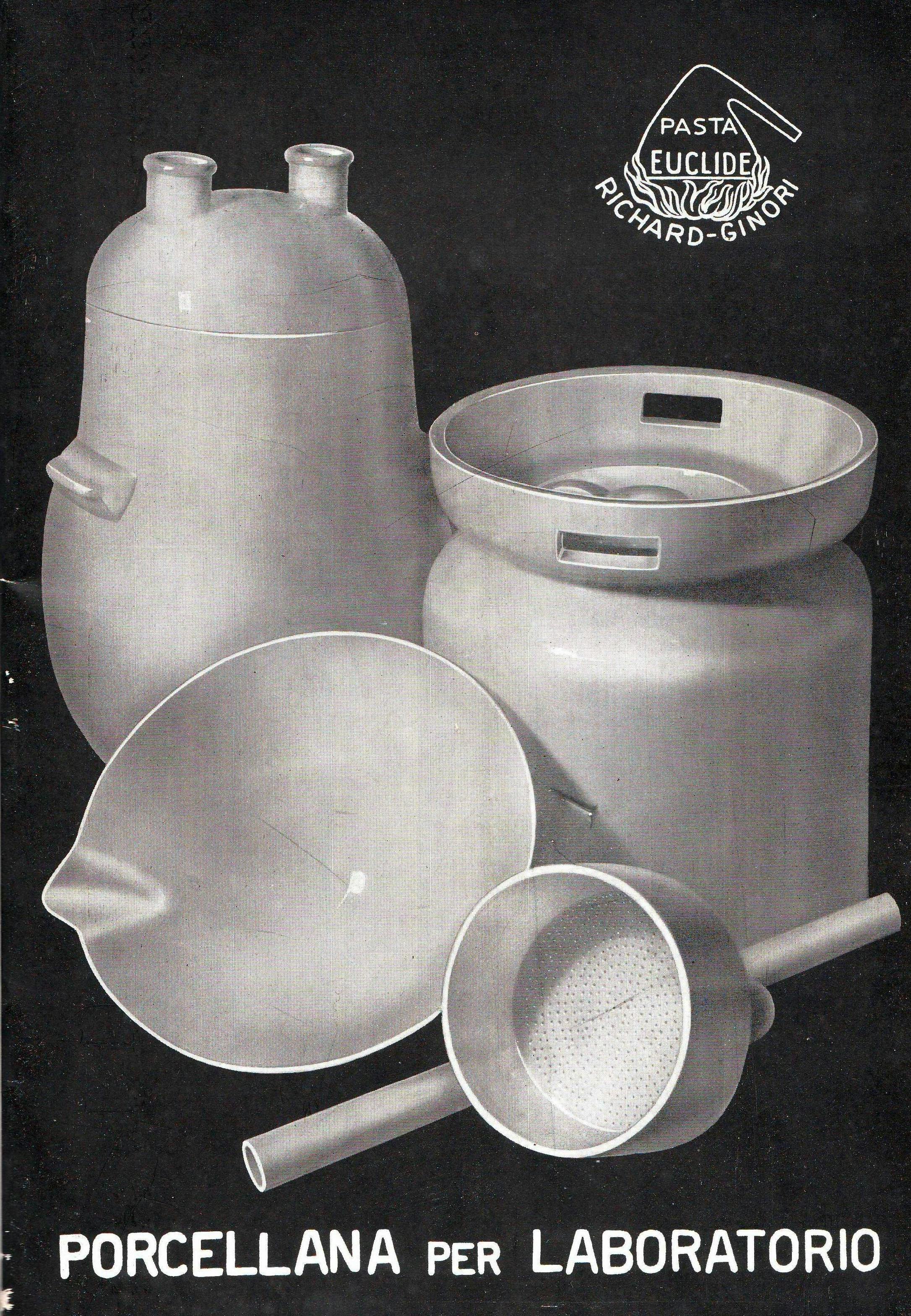
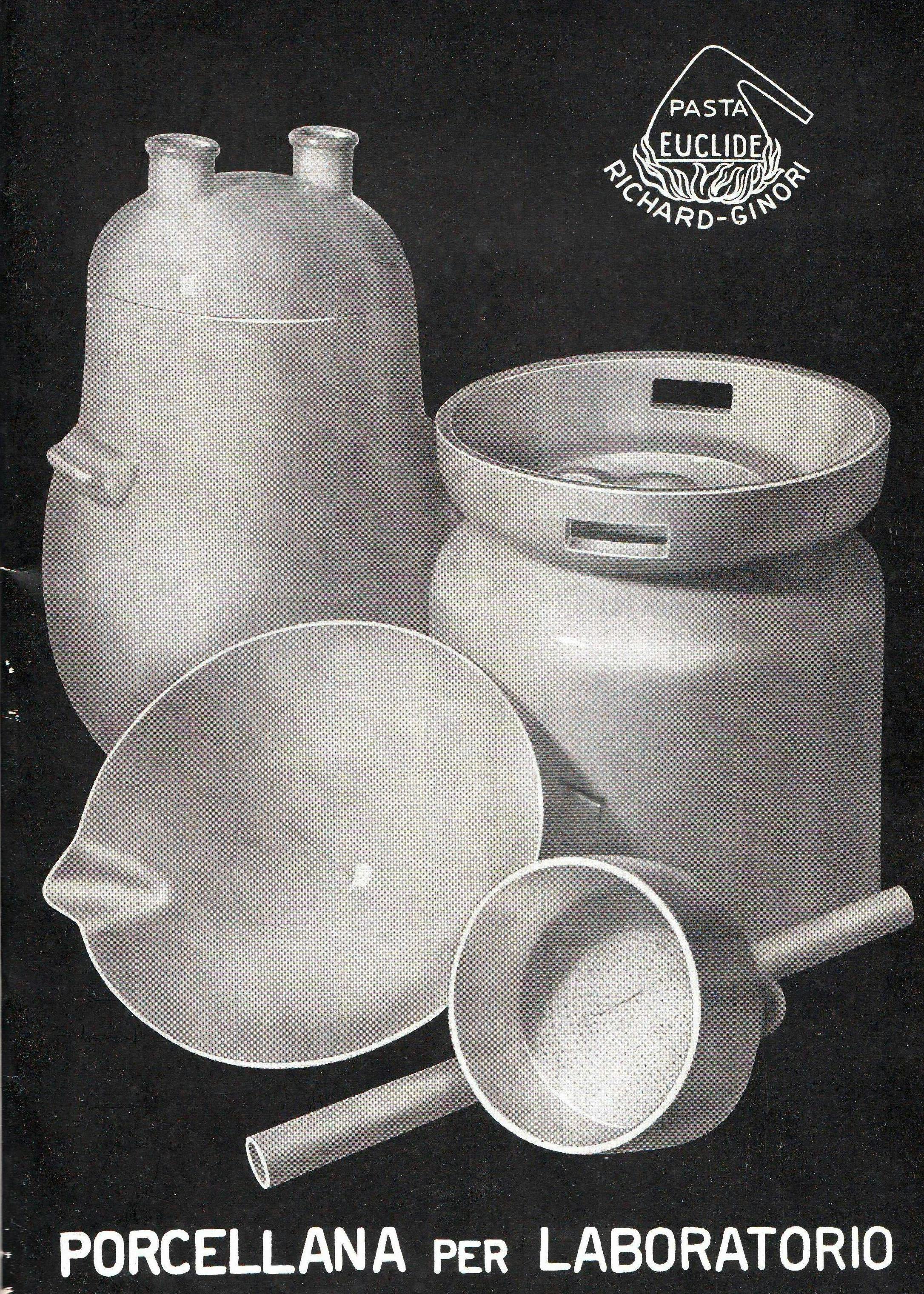
At the end of the 19th century, Richard-Ginori patented a particular type of clay, which - due to its high resistance to fire and especially to temperature changes - was called "Pirofila".
The catalogue from which this illustration is taken was published in 1901 and is entirely dedicated to this special porcelain, including a description of its characteristics, which were ideal for the production of ovenware. The price lists included pots, tureens, casseroles, kettles, milk jugs, coffee machines, moulds, and tart pans of various shapes and sizes, as well as complete tea or coffee sets and breakfast cups.
"Pirofila" products could be made in white, glazed in brown or with a burnt background. For types intended to be brought to the table, there was also the possibility of decorating handles, grips, borders or other details in gold. Each model had an identification number with available sizes and capacities, as well as the price for each individual piece.