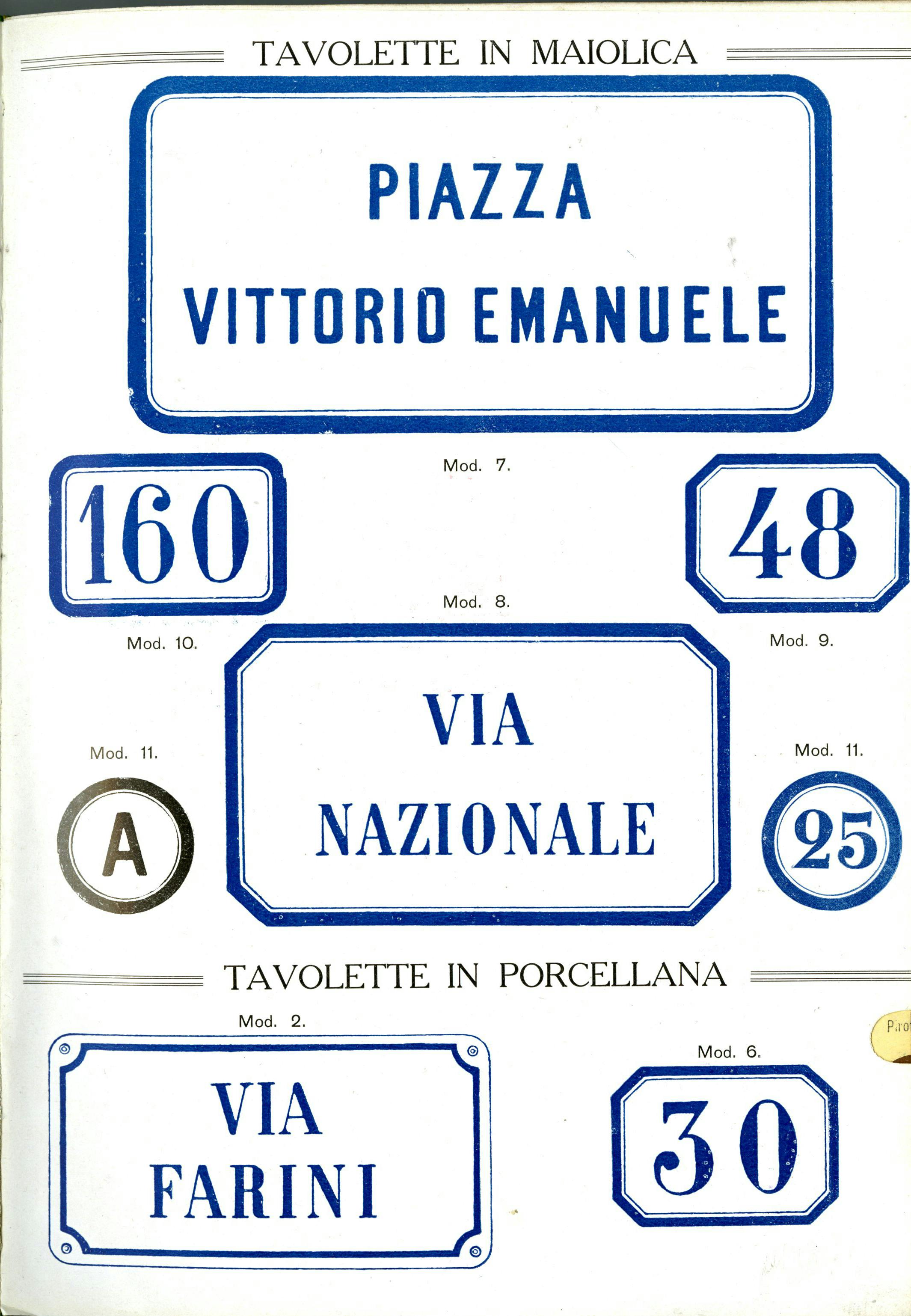

From its origins and throughout the 19th century, the Manifattura Ginori produced maiolica wall tiles, also known as “ambrogette.” In the 20th century, this material was replaced by strong earthenware (terraglia forte), a particular type of white-bodied ceramic. During this period, ornamental tiles were used to create simplified, modular phytomorphic compositions, typical of the Art Nouveau style.
A prosperous period for the production of ornamental coverings was certainly the post-World War II era, thanks to the construction boom of the 1960s. Responding to both building and furnishing needs, the interior tile decorations of this phase are characterized by the use of colourful abstract decorative motifs, fine lines on a white background, or references to plants and trees.
Under the artistic direction of Giovanni Gariboldi, the factory produced numerous tile models, including the example presented here, dated 1964 and adorned with a grey enamel decoration featuring a magnolia blossom with six petals alternating with six buds.
The prevailing compositional approach during this period was the repetitive one, which involved placing identical tiles side by side to create a decoration resulting from the repetition of a single ornamental pattern.