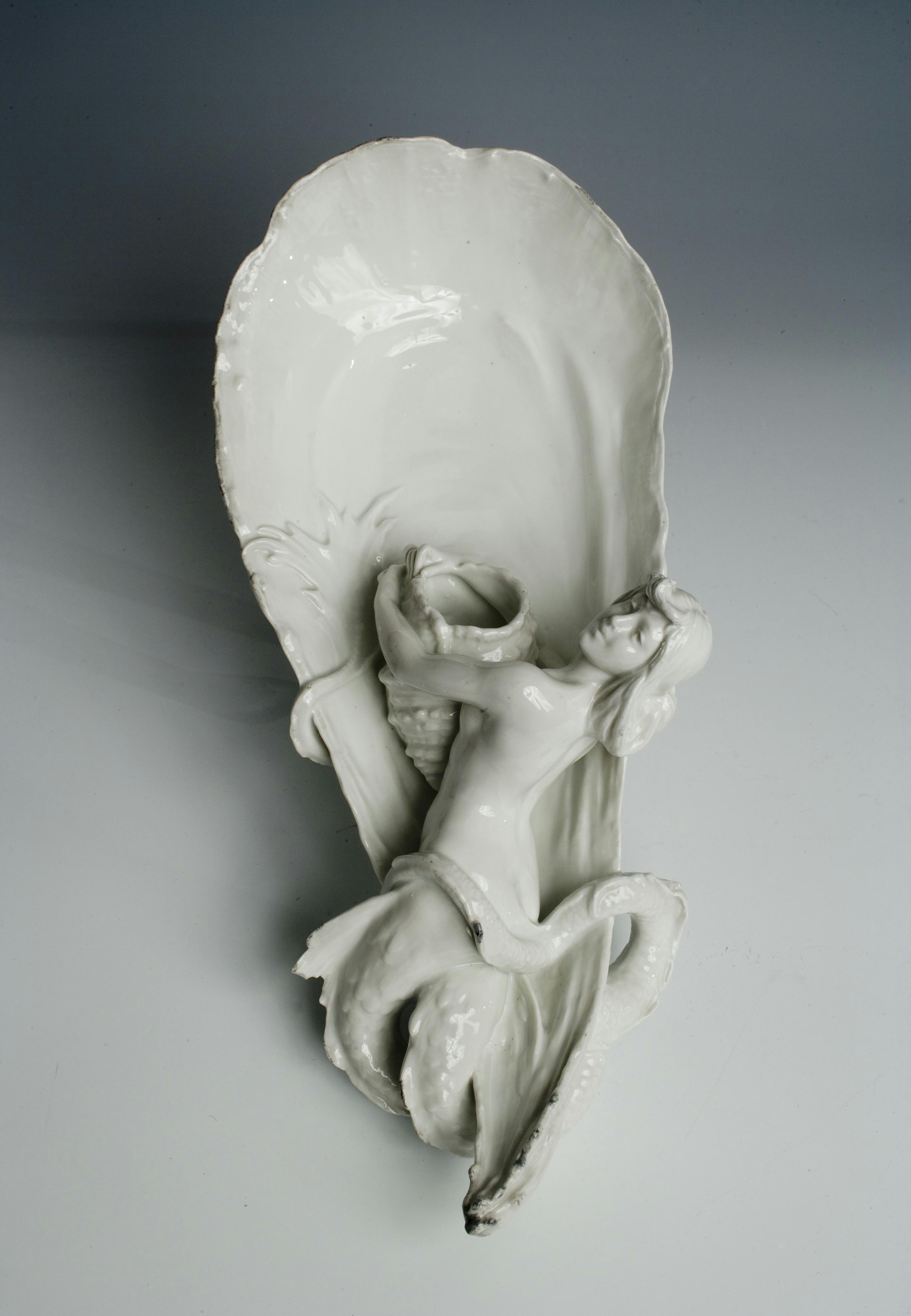
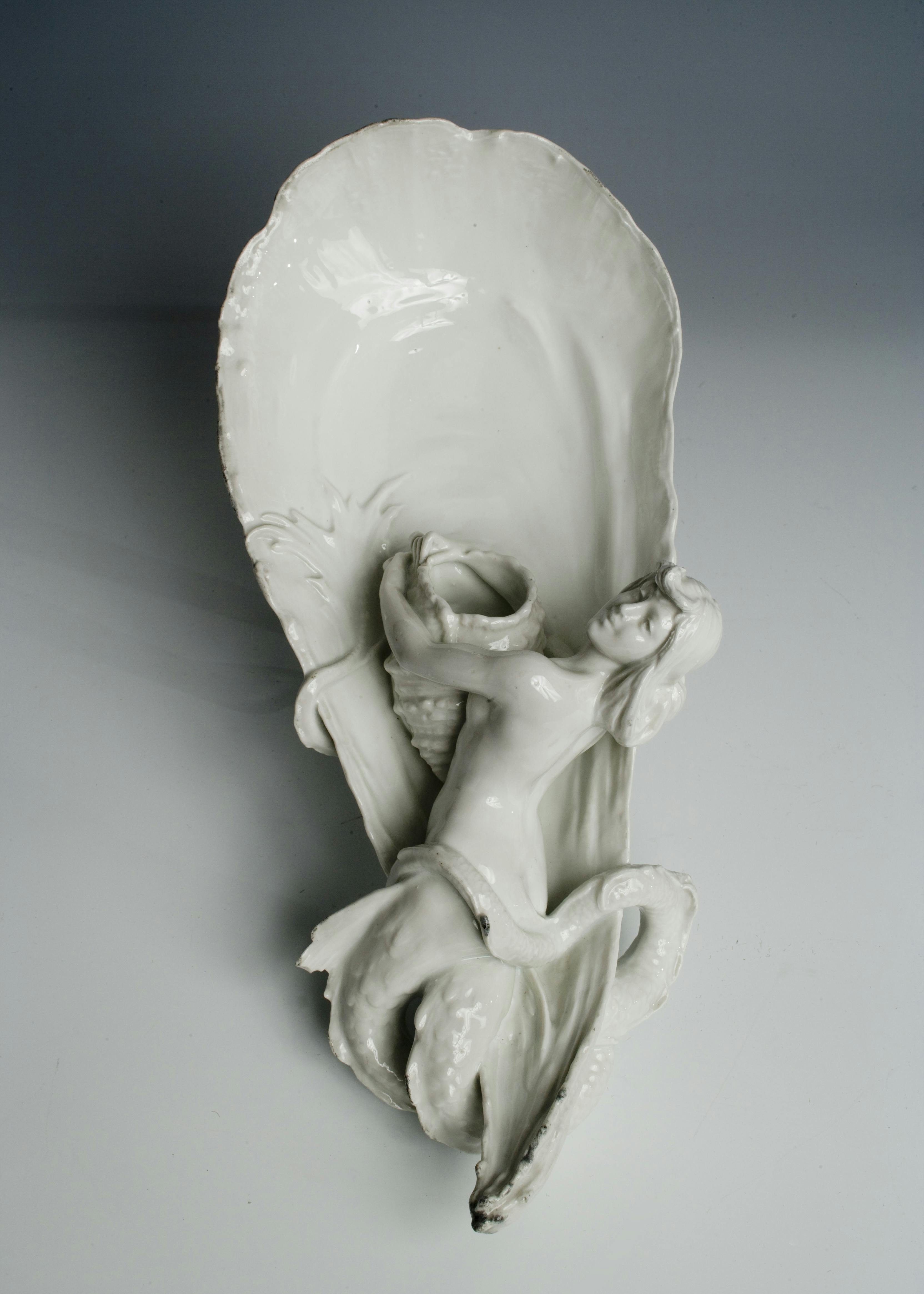
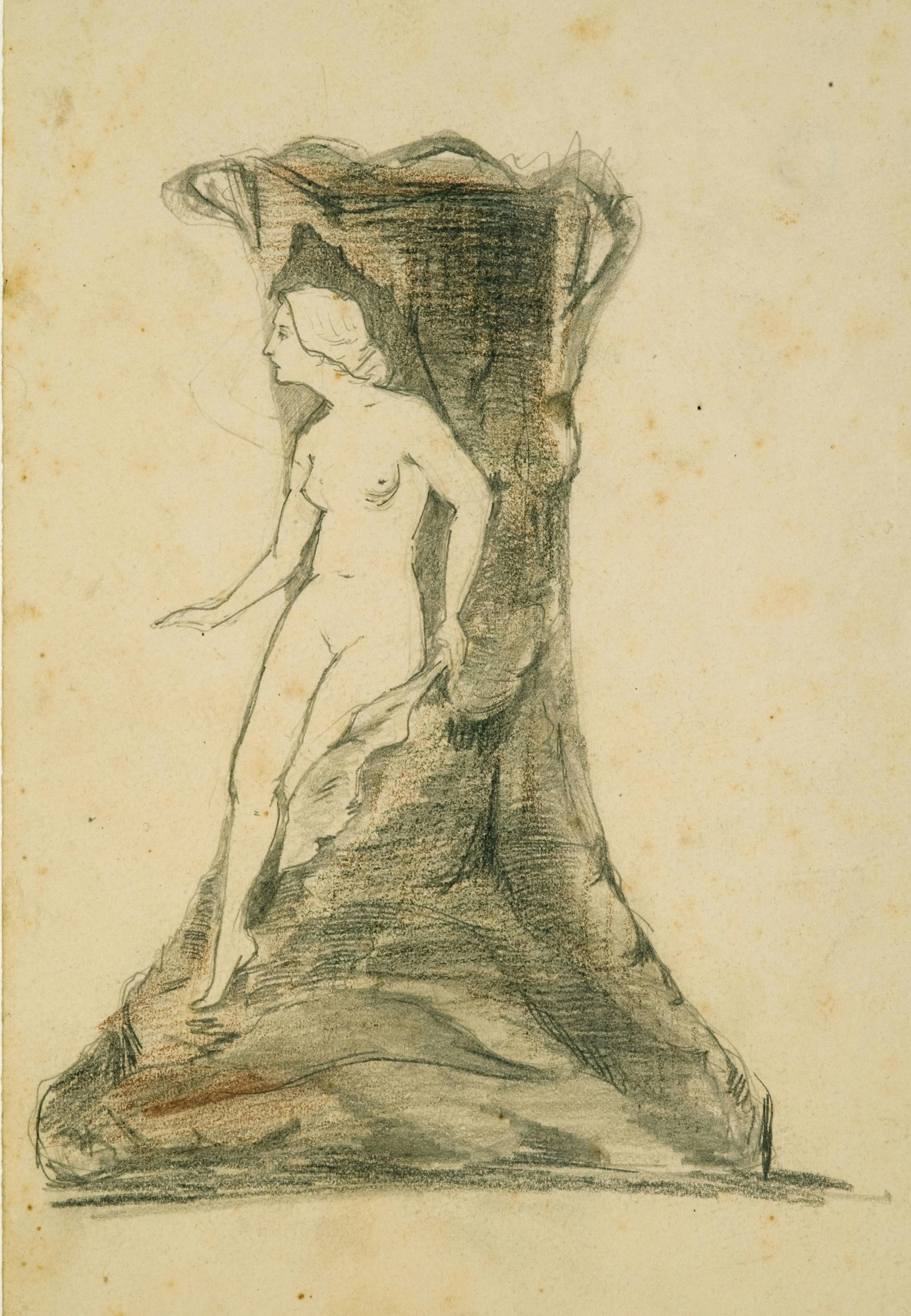
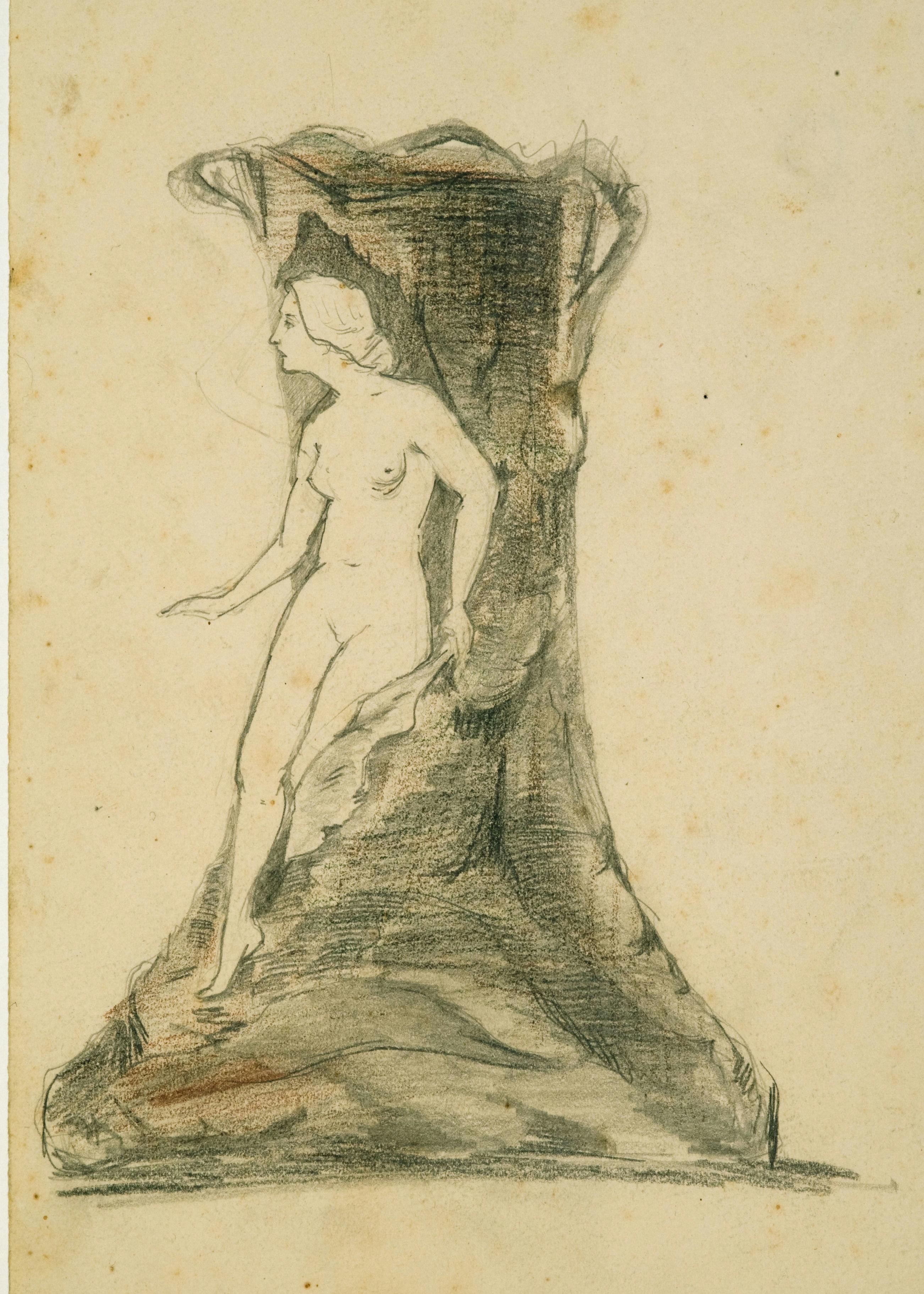
This sketch in pencil, ink, and watercolor on paper shows a study for the creation of a porcelain lamp with a flared shape, featuring a decoration of calla lily stems in relief on the body and foliage at the base. At the top, the form is characterized by a crown of overlapping leaves, also in relief, in different shades of green. The lampshade was perhaps intended to be made in lithophane, a porcelain with graduated thickness that allows light to pass through to reveal a decoration.


The drawing, dating to the first decade of the 20th century, fully reflects the Doccia factory’s adherence to the stylistic elements of the Art Nouveau language. The driving force behind this revolution was the head of the factory’s artistic production, Luigi Tazzini, who brought to Doccia inspirations related to shapes and decorative models he had seen at the 1900 Universal Exposition in Paris. The art production of the Doccia factory between 1900 and 1910 fully embraces the new trend: drawing inspiration from the plant world (often in dialogue with graceful female figures), shape and decoration intertwine with each other in an organic whole.