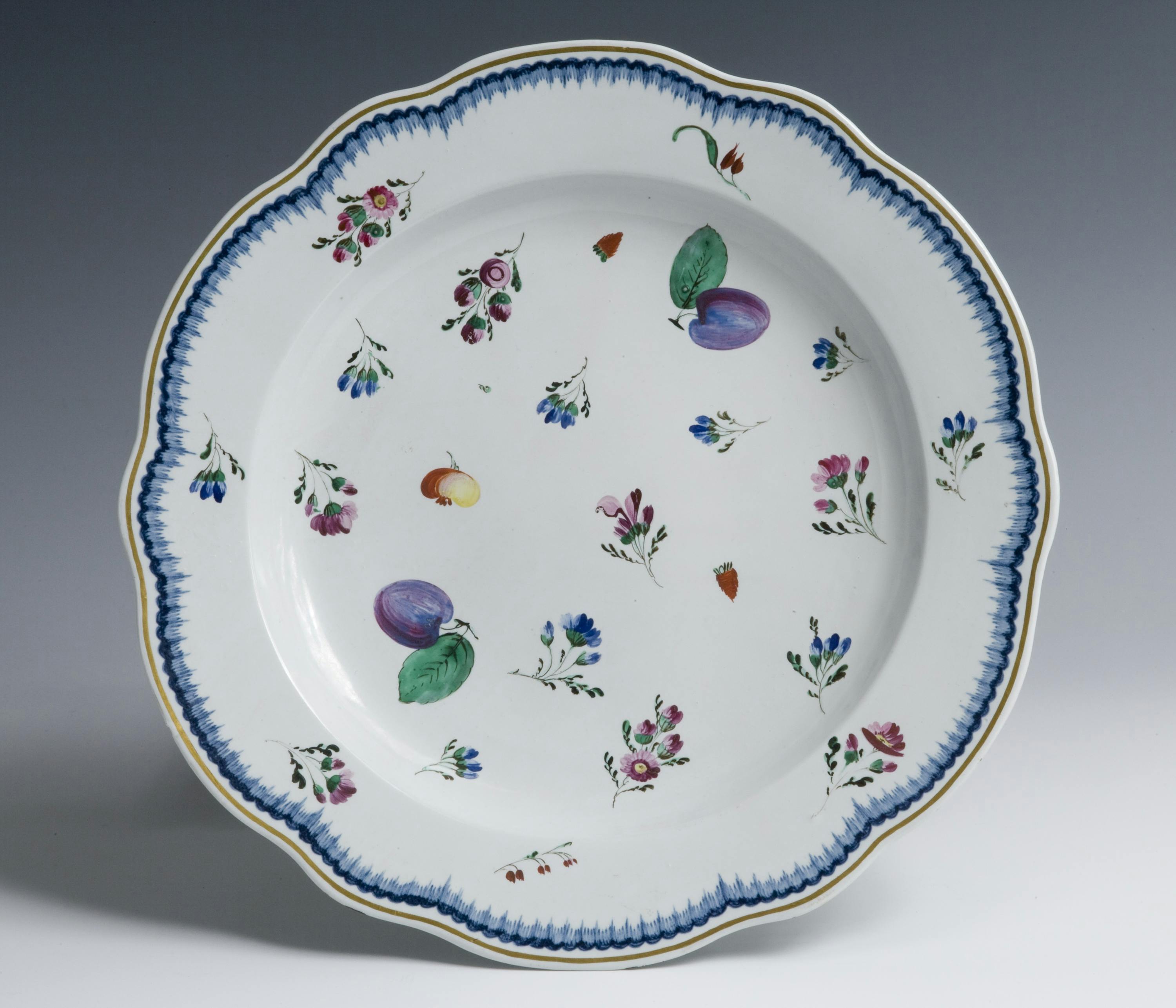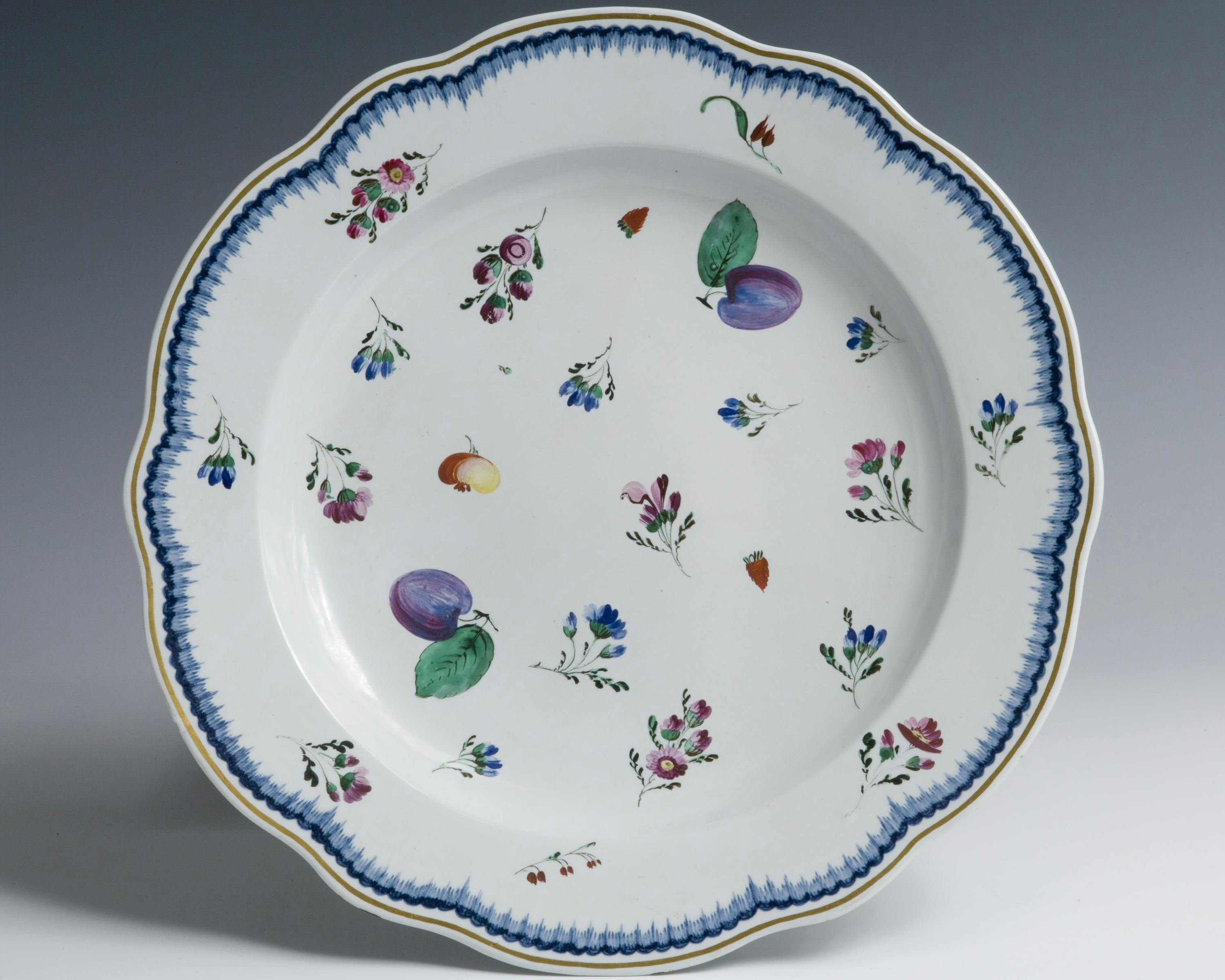
Historical archives and historical library
Due to the variety of materials it preserves, the Archives of the Museo Ginori serves as a reference point for scholars engaged in various fields of research, from art history to social sciences. It is a place of memory and a cradle of artistic-industrial creativity from which new ideas for future design can always be drawn.
Overall, the paper archive appears as a miscellany. The various eras of the factory’s life are documented from 1801, the year of the first warehouse register, up to the artistic direction carried out by the architect Gio Ponti from 1923 to around 1932.
Following this period there are mainly price lists, product catalogs, and Richard-Ginori advertising materials, along with a few other documents. Among the most significant are those related to the museum’s inauguration and a correspondence with images and press reviews of the November 1966 flood, when the Sesto Fiorentino plant hosted many volumes from the Florence National Library that were swept away by mud and saved in porcelain drying ovens.
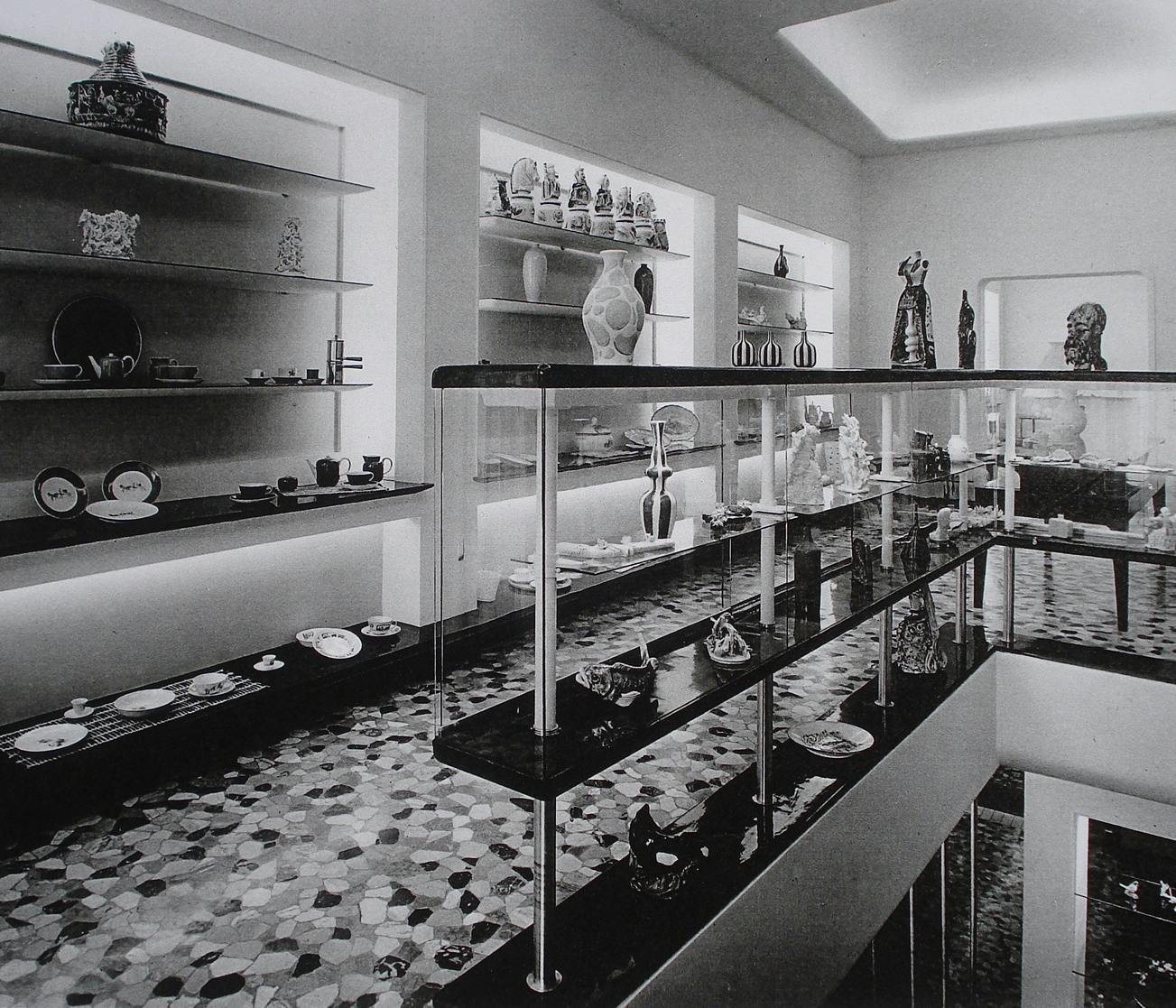
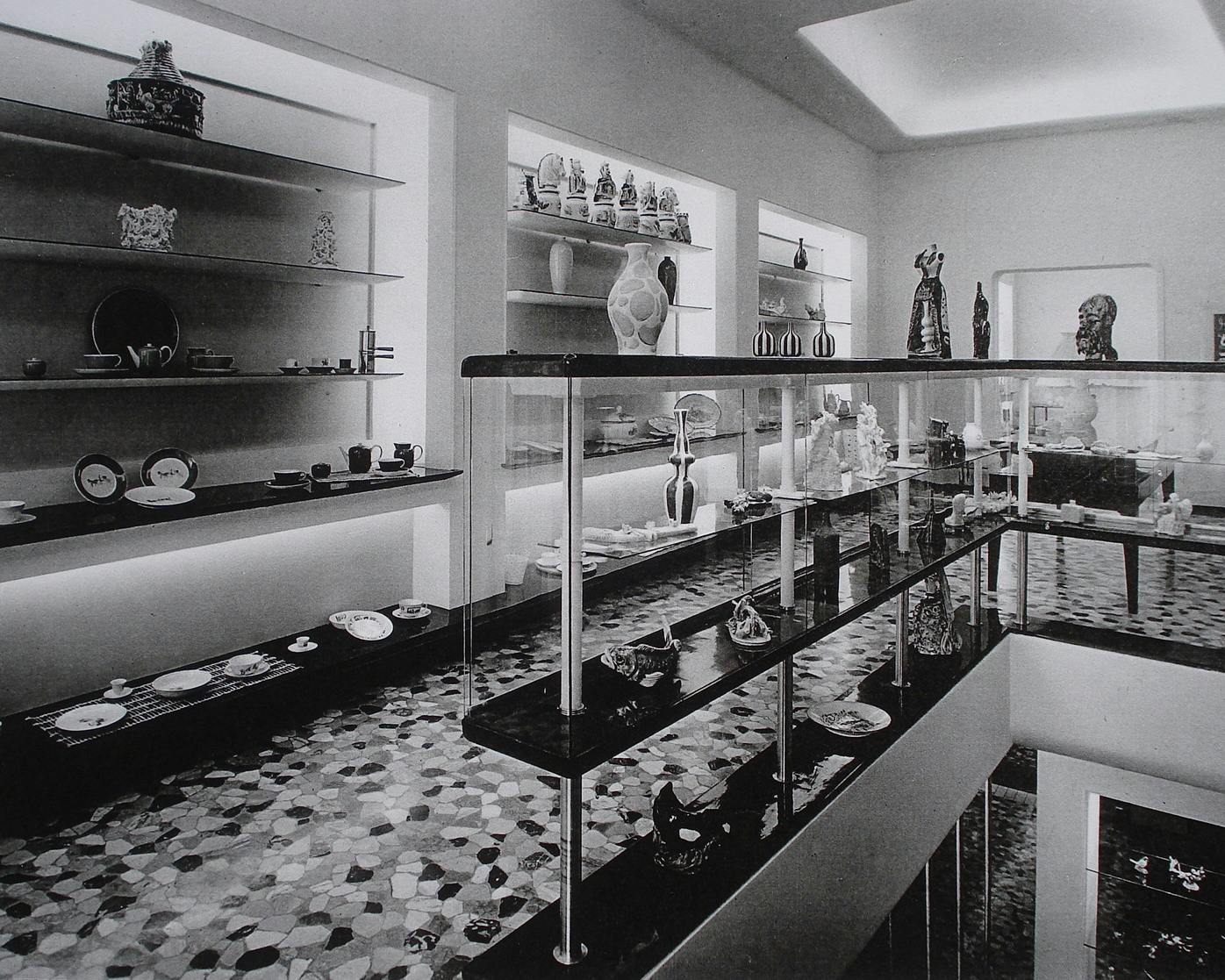
An integral part of the Archive is also a substantial corpus of vintage photographs documenting both artifacts and exhibitions, shops, distinguished visitors, and activities within the plant.

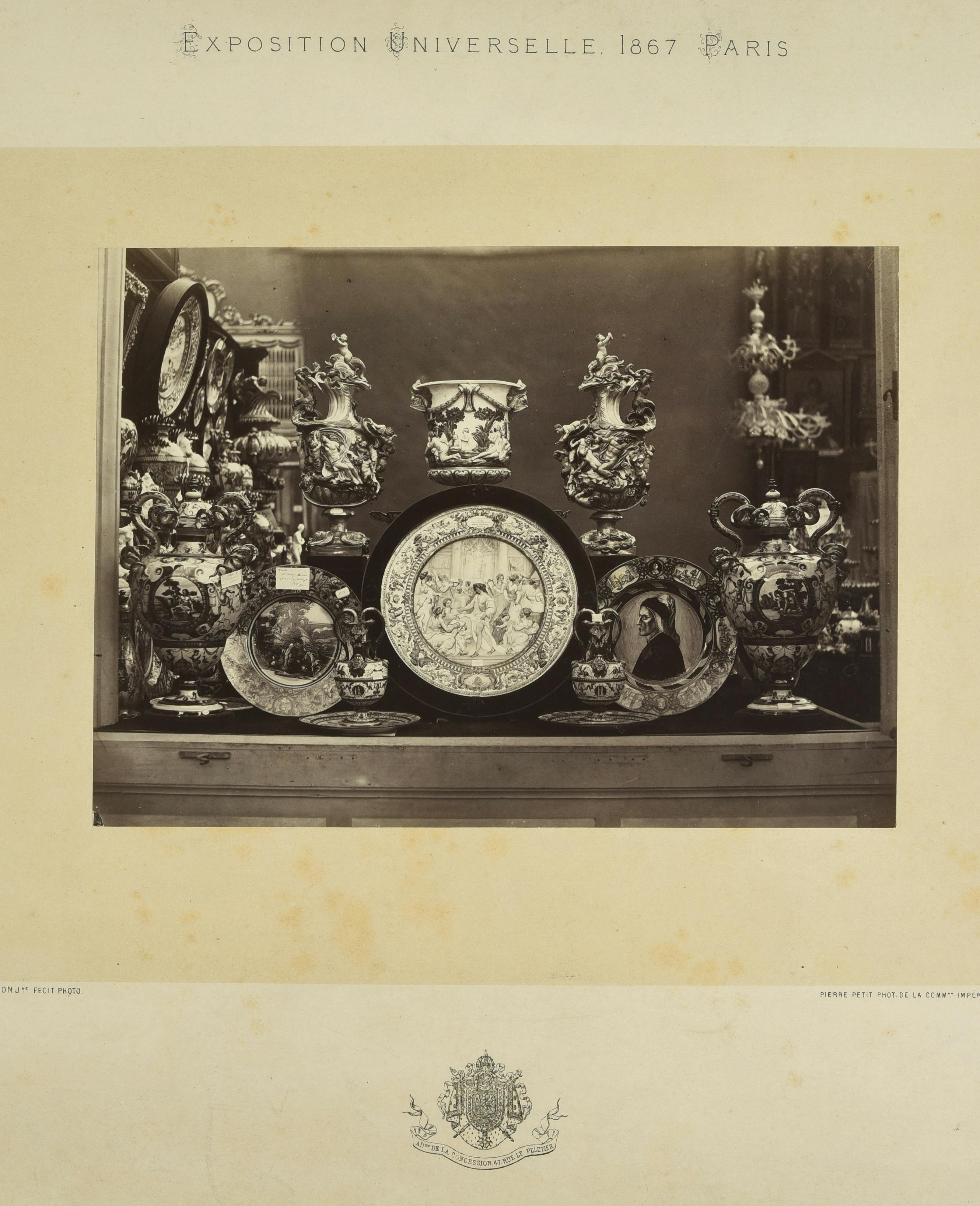
Manifattura Ginori di Doccia Pavilion at the 1867 Universal Exposition in Paris, period photograph mounted on cardboard, Ginori Museum Archive

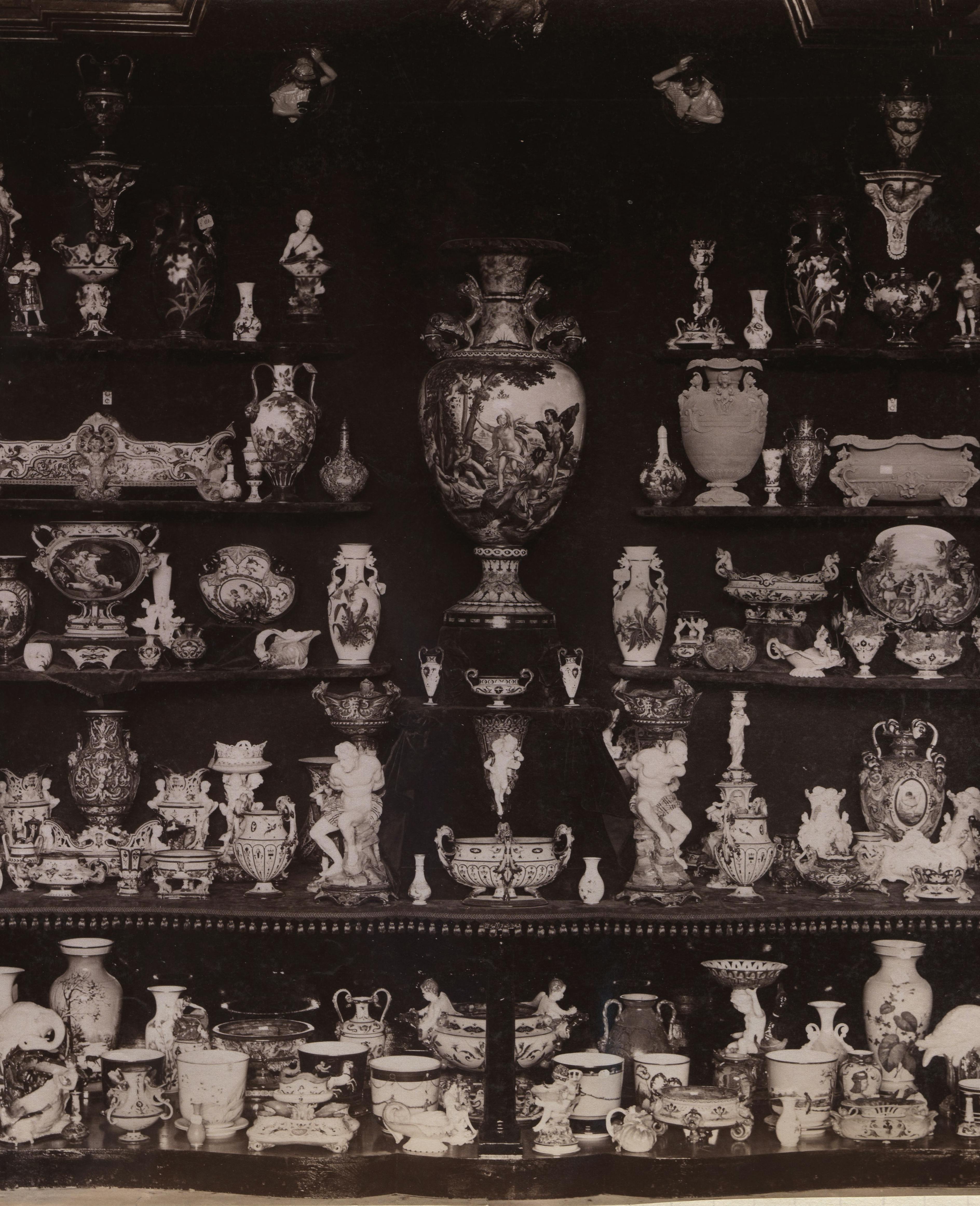
Ginori Pavilion at the 1897 Florence Horticultural Exhibition, period photo, 1897, Ginori Museum Archive

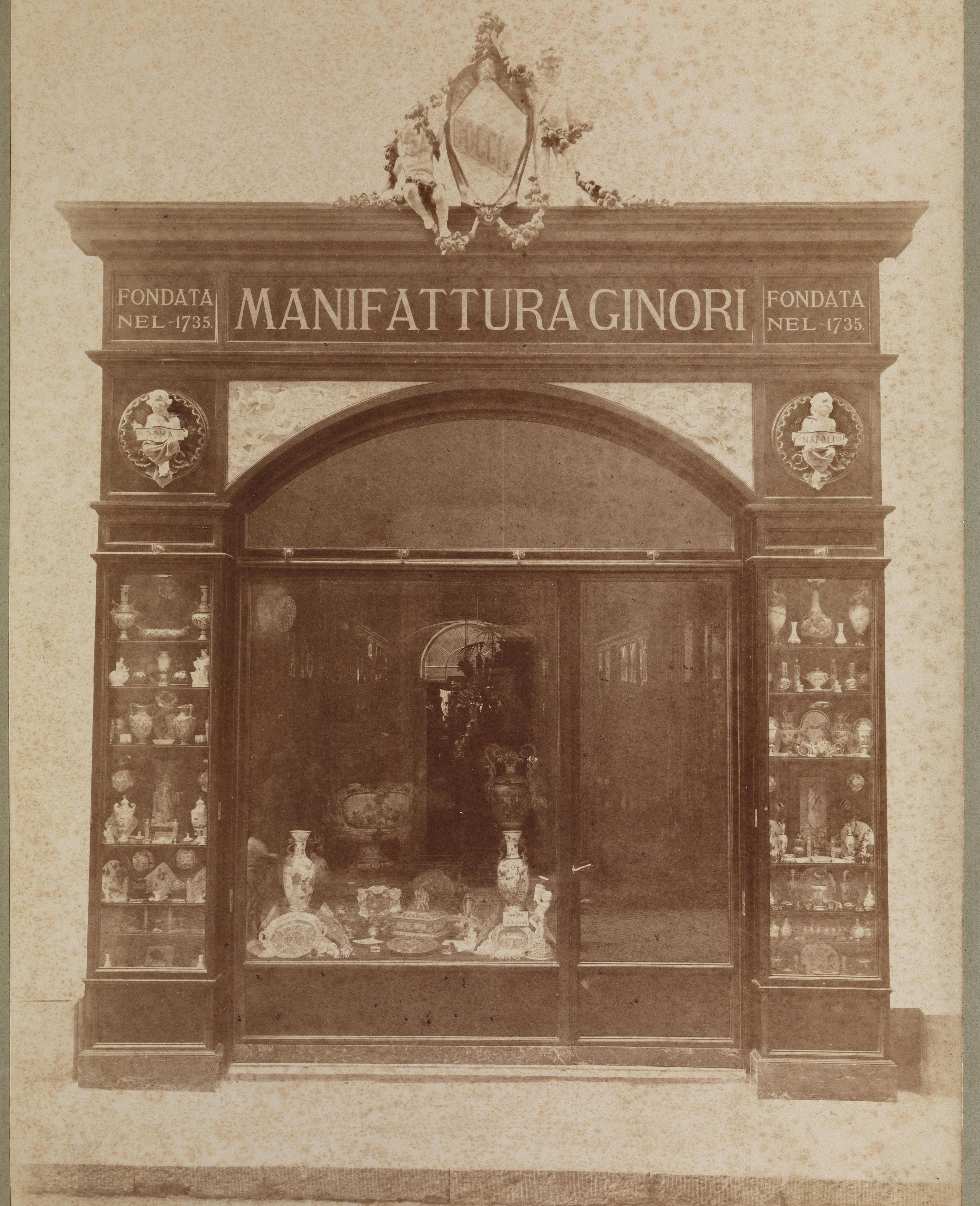
View of the main entrance of the Ginori Warehouse in Florence, vintage photo, circa 1893, Ginori Museum Archive

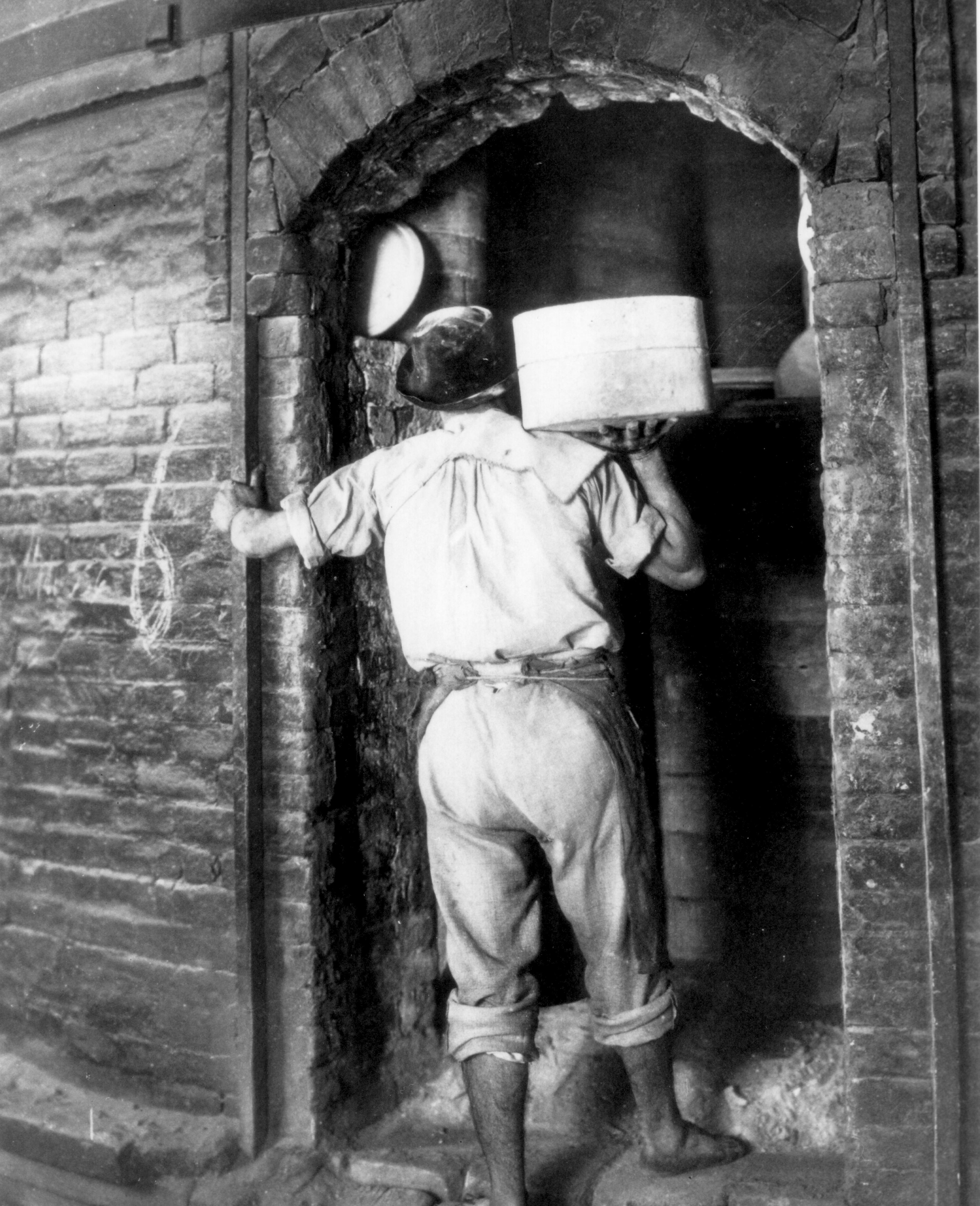
Aworker enters one of the Doccia kilns carrying a firing tray, Alinari photo, circa 1900, Ginori Museum Archive
The Archives also preserve more than 5000 drawings, executed with various techniques, including numerous watercolor sketches for decoration on maiolica and porcelain dating from the second half of the nineteenth century to the first decade of the twentieth century, as well as envelopes containing the spolveri (pricked cartoons) used for decoration on maiolica and porcelain.
Of particular importance are the sketches by Gio Ponti sent as attachments to his letters, but also on cardboard and album sheets, and the drawings by Elena Diana made according to the architect’s directions for porcelain and agate point engravings.


Sketch for a mesciroba vase, second half of the 19th century, pencil and colored pencils on paper, Archivio Museo Ginori


Manifattura Ginori, Stencil for the decoration “The Peach” by Angelo Marabini (detail), perforated glossy paper, circa 1879, Ginori Museum Archive

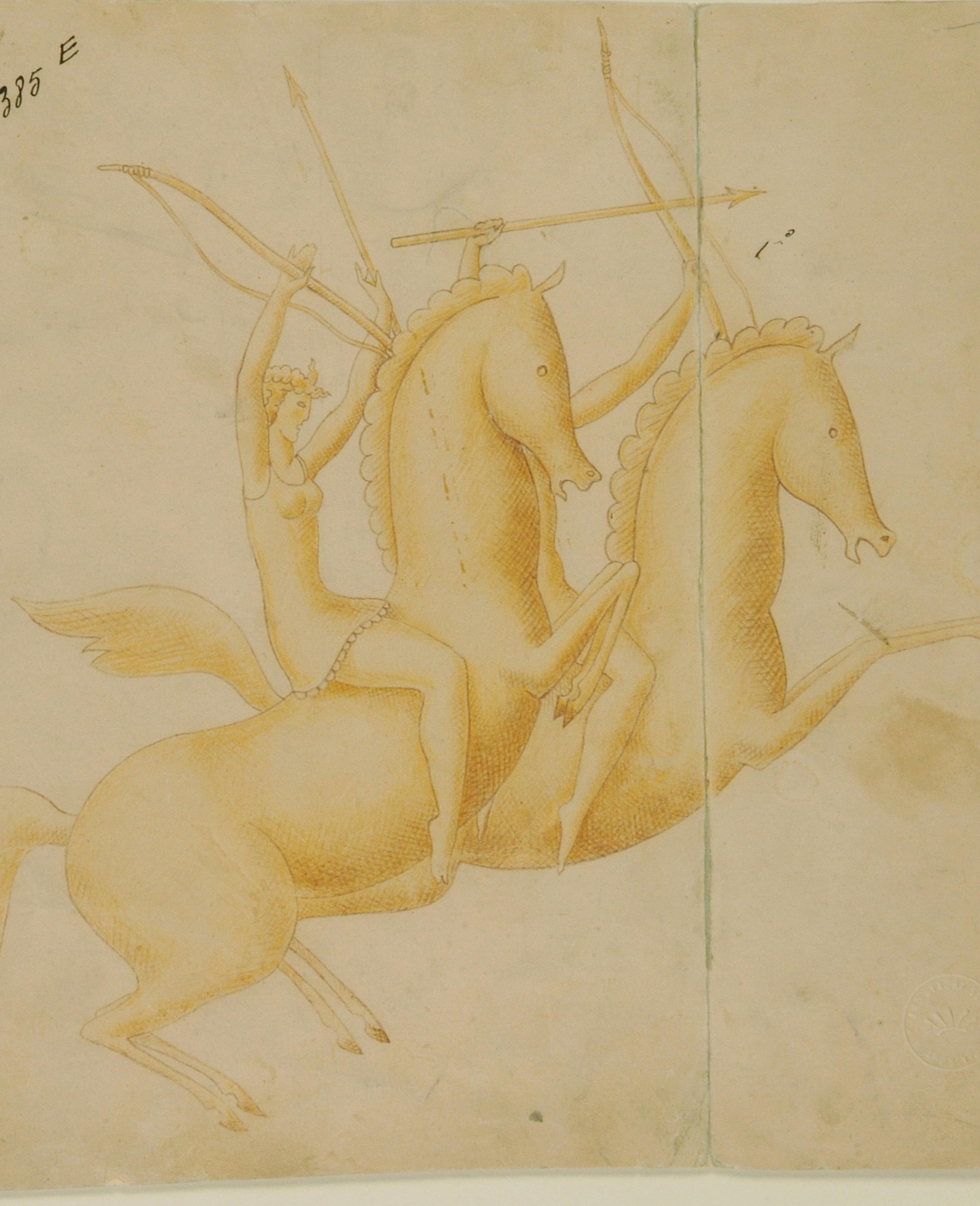
Preparatory drawing for the decoration by Gio Ponti “The Triumph of the Amazons” from the series La venatoria, circa 1929, yellow and brown pencil on paper, Ginori Museum Archive


Preparatory drawing for a maiolica plate with decoration by Gio Ponti “Il fattaccio,” circa 1924, ink and watercolor on paper, Ginori Museum Archive
The museum also preserves samples, catalogs, and the Tariffari (price lists) of the manufactory, which constitute a valuable source for understanding the strategies related to the production and marketing of Doccia’s artifacts.

Manifattura Ginori, Porcelain - Collection of drawings, Florence 1886, Ginori Museum Archive

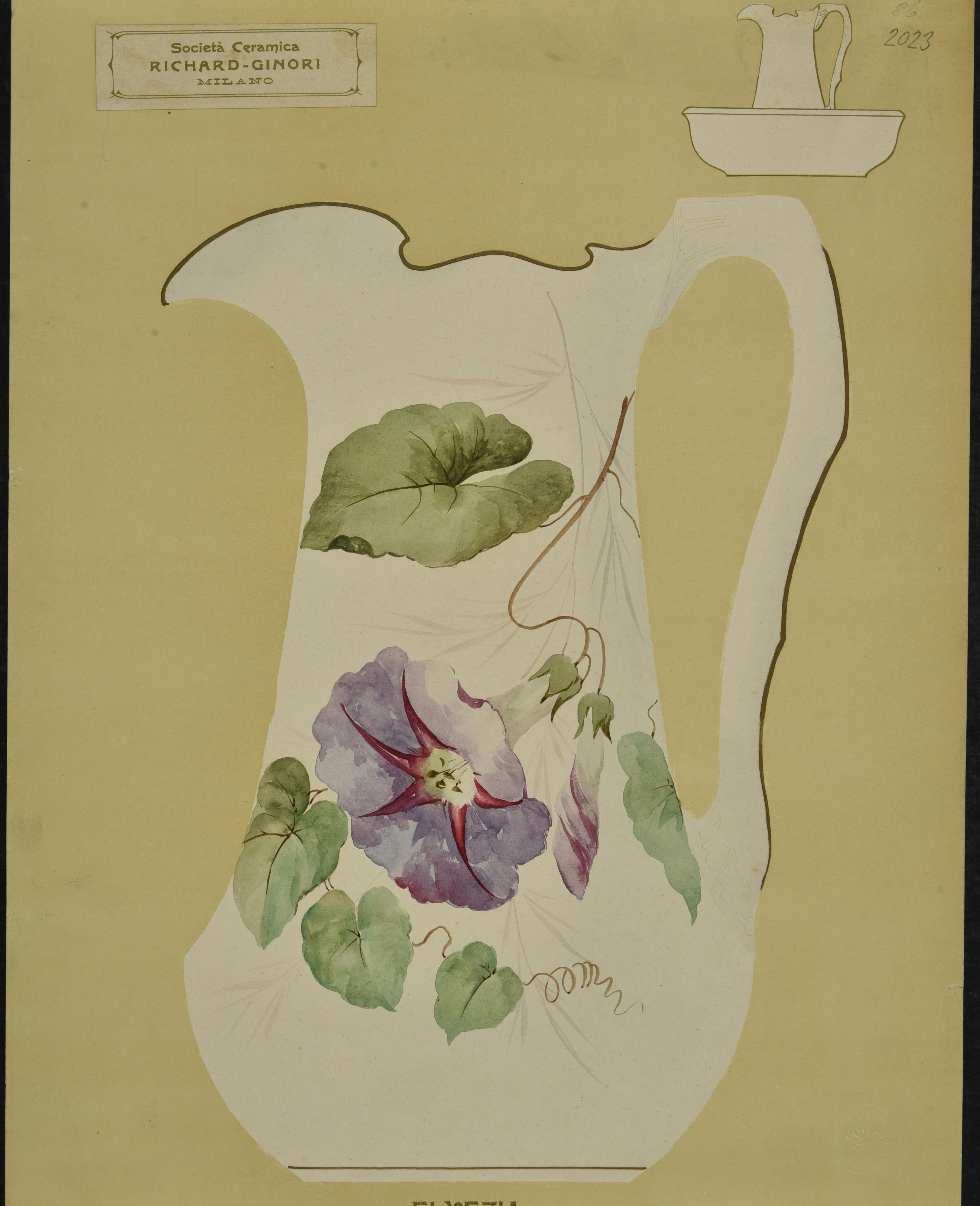
Caolinite Catalog Richard Ginori, circa 1900, watercolor on paper, Ginori Museum Archive

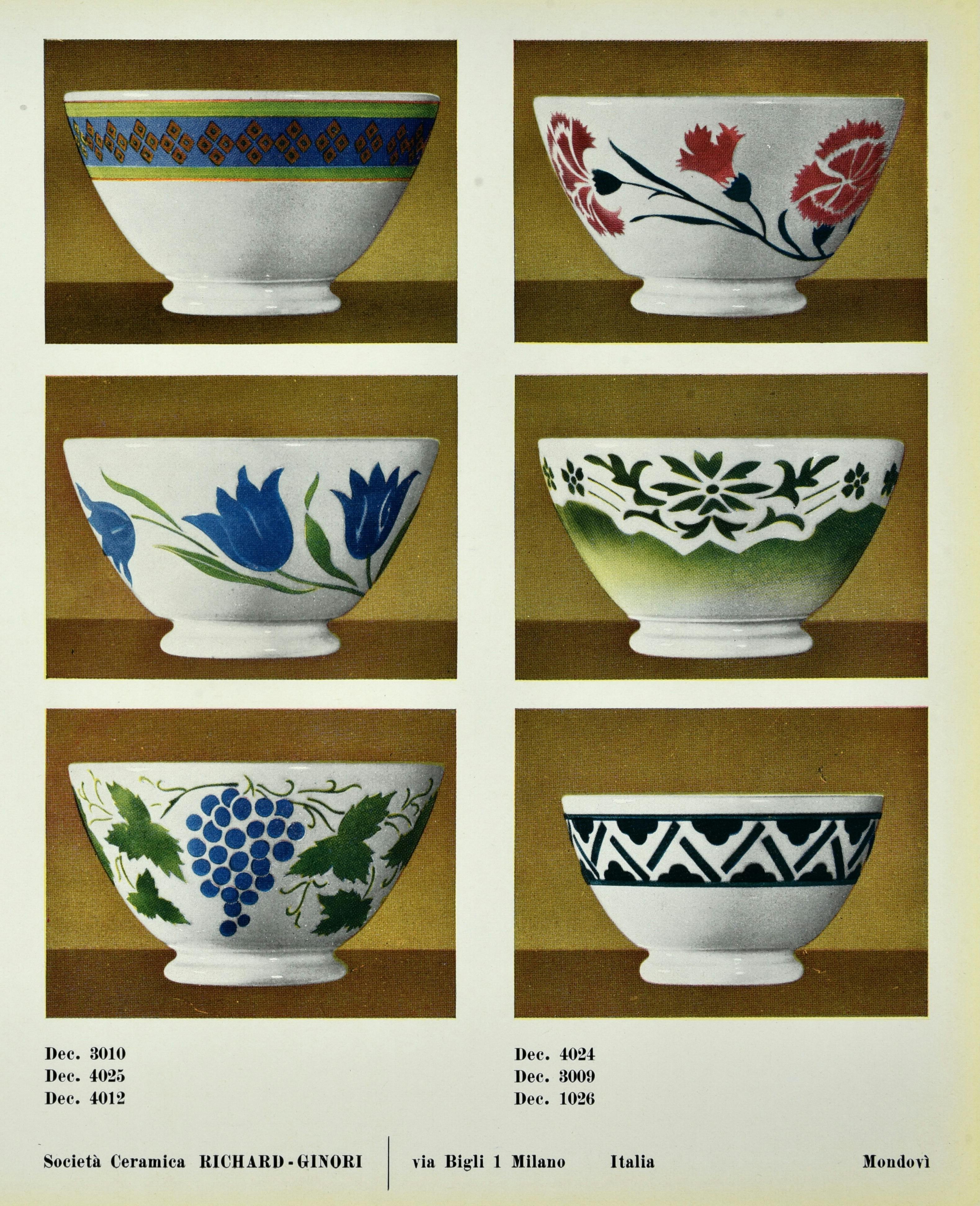
Illustrated plate with decorations from Mondovì, circa 1950, Ginori Museum Archive

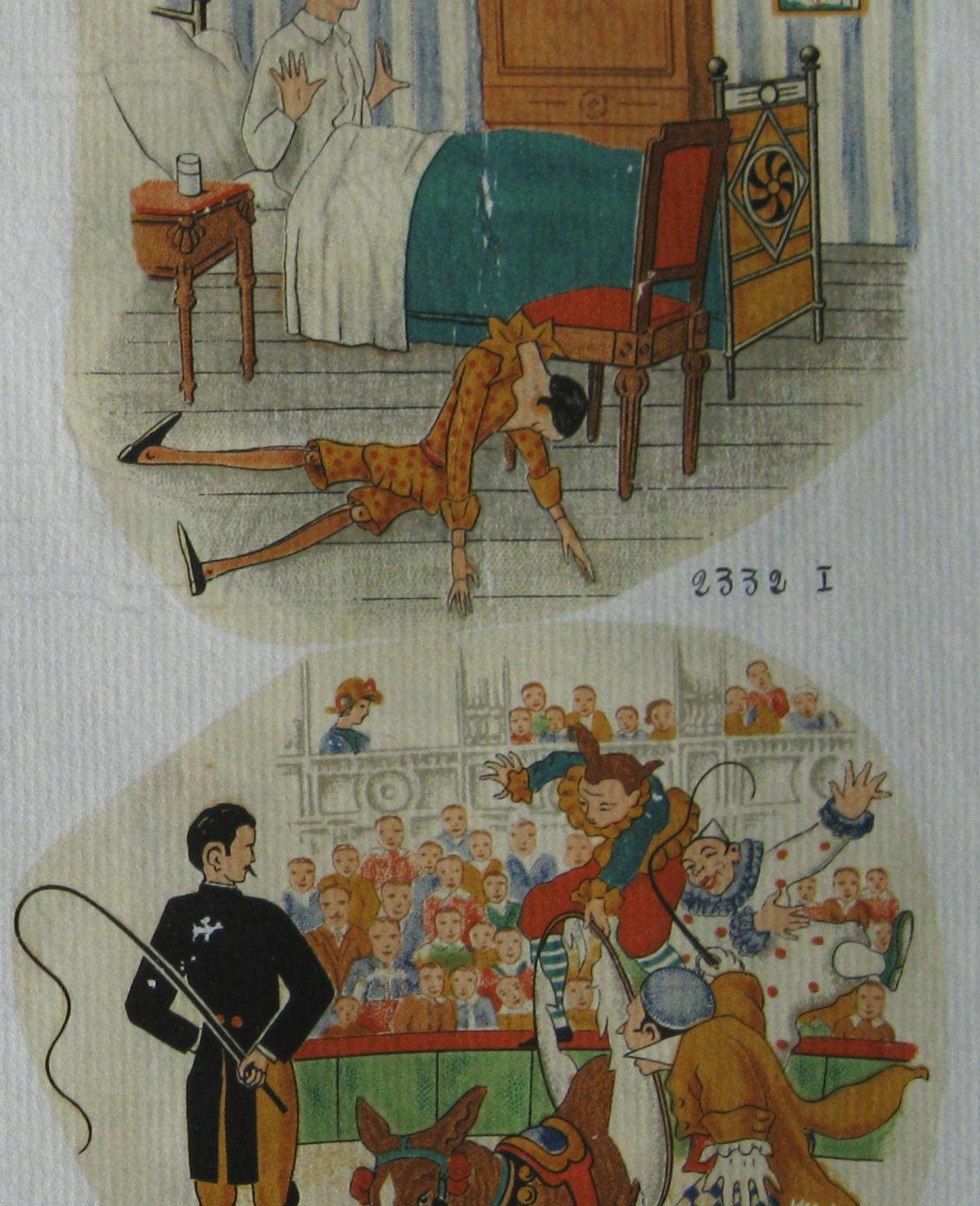
Panel with vignettes illustrating the story of Pinocchio, Sample of decal decorations, circa 1925-1940, Ginori Museum Archive

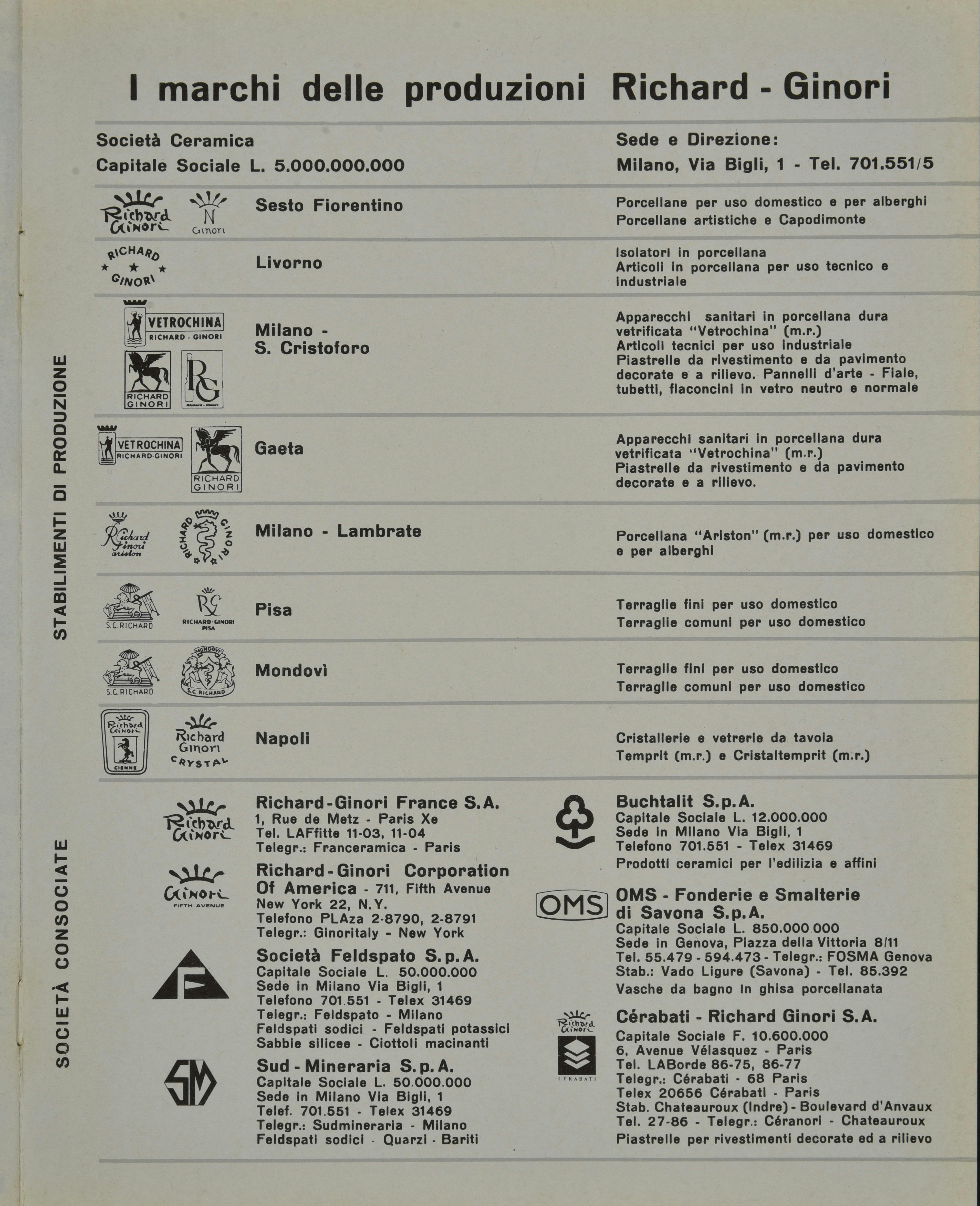
"The trademarks of Richard-Ginori productions," Richard-Ginori company magazine, year V, 1964

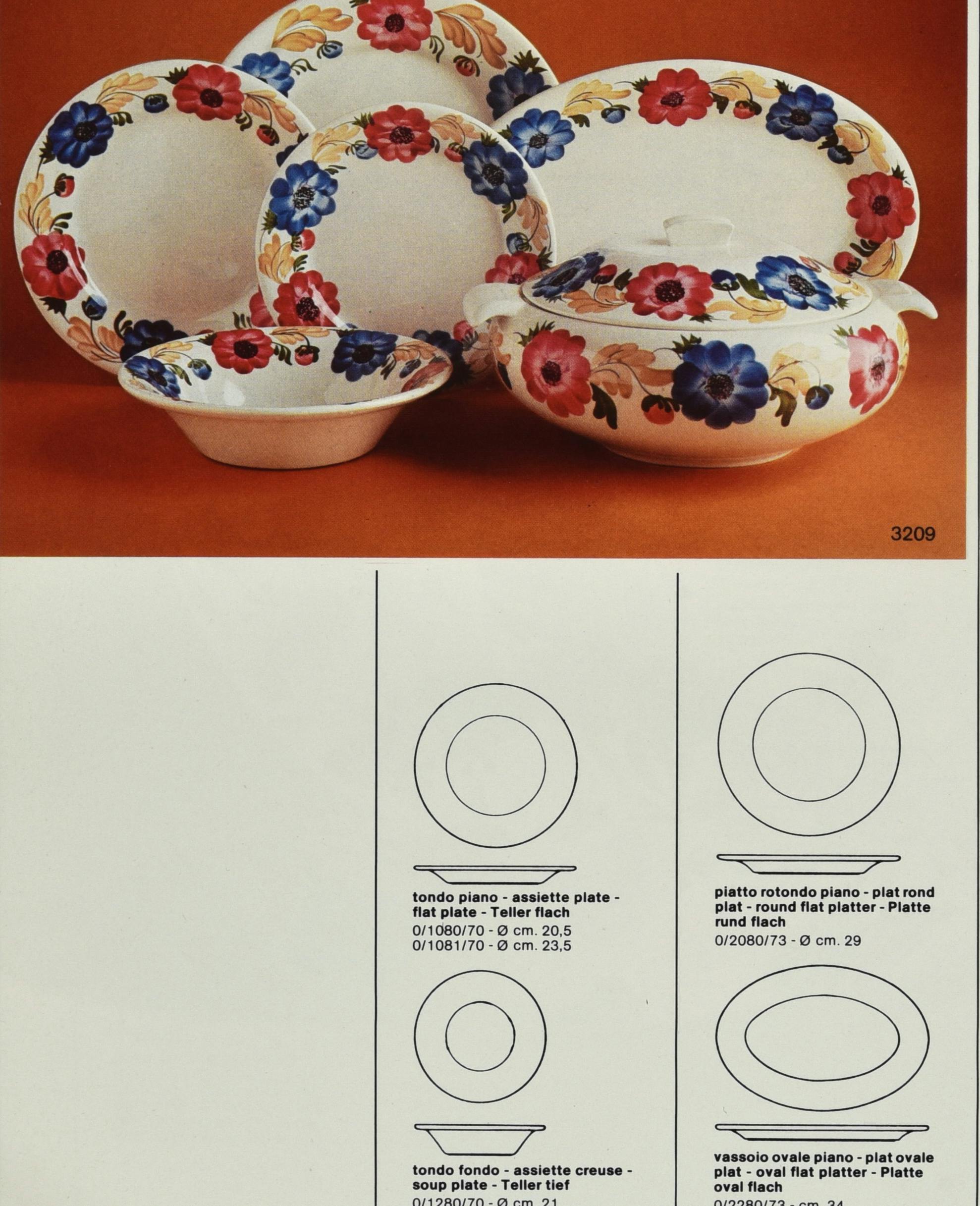
Advertising brochure for the Paola service, circa 1980, Ginori Museum Archive
The Historical Library of the Museo Ginori houses more than 500 volumes, ranging from collections of loose sheets from various sources to important illustrated printed repertories from the seventeenth and eighteenth centuries, used as sources for the creation of shapes and decorations, as well as historical magazines such as “The Studio” and “Domus.”

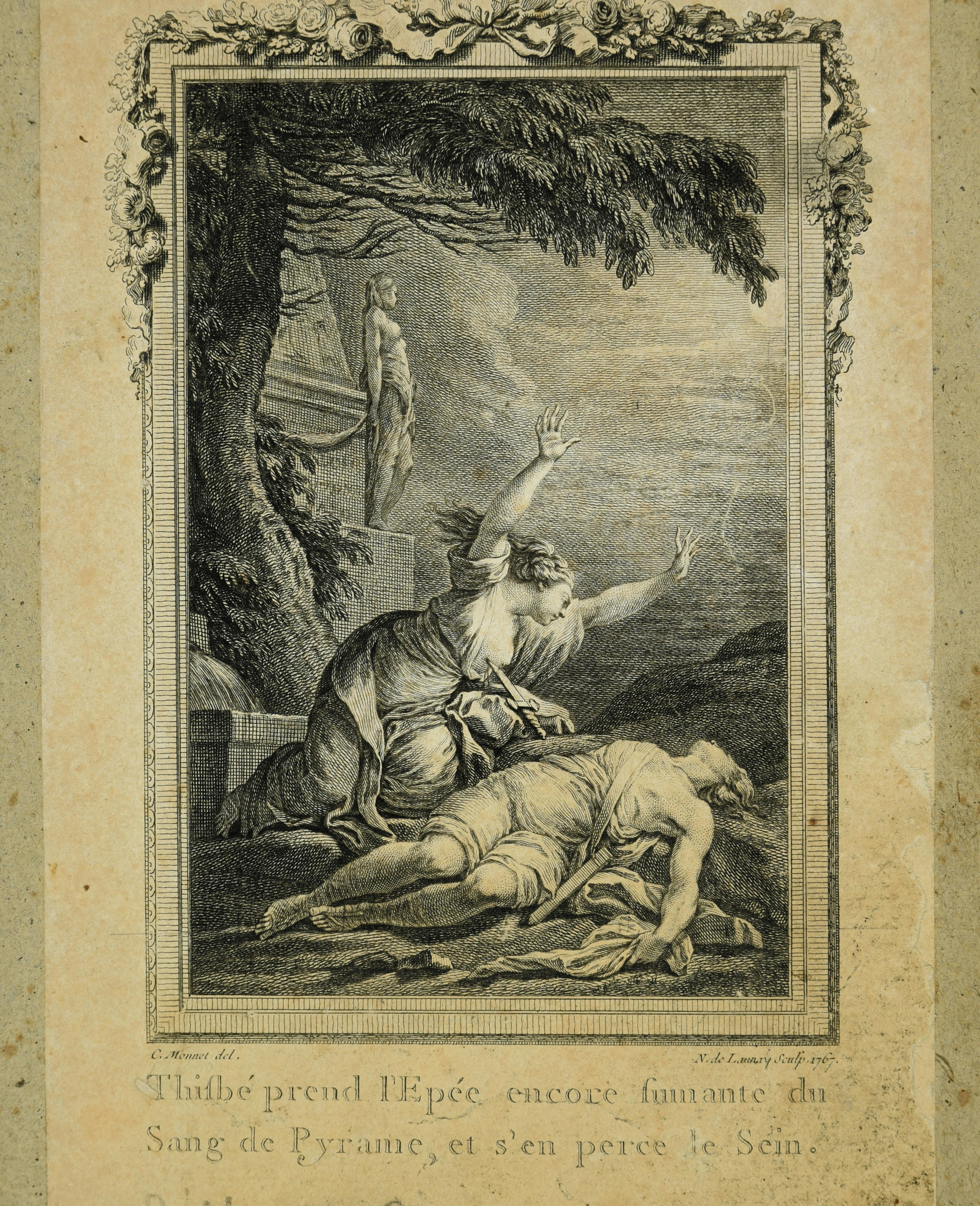
C. Monnet (designer), N. De Launay (engraver), Pyramus and Thisbe, from Les Métamorphoses d'Ovide [...], Paris 1767, engraving mounted on cardboard, Ginori Museum Archive

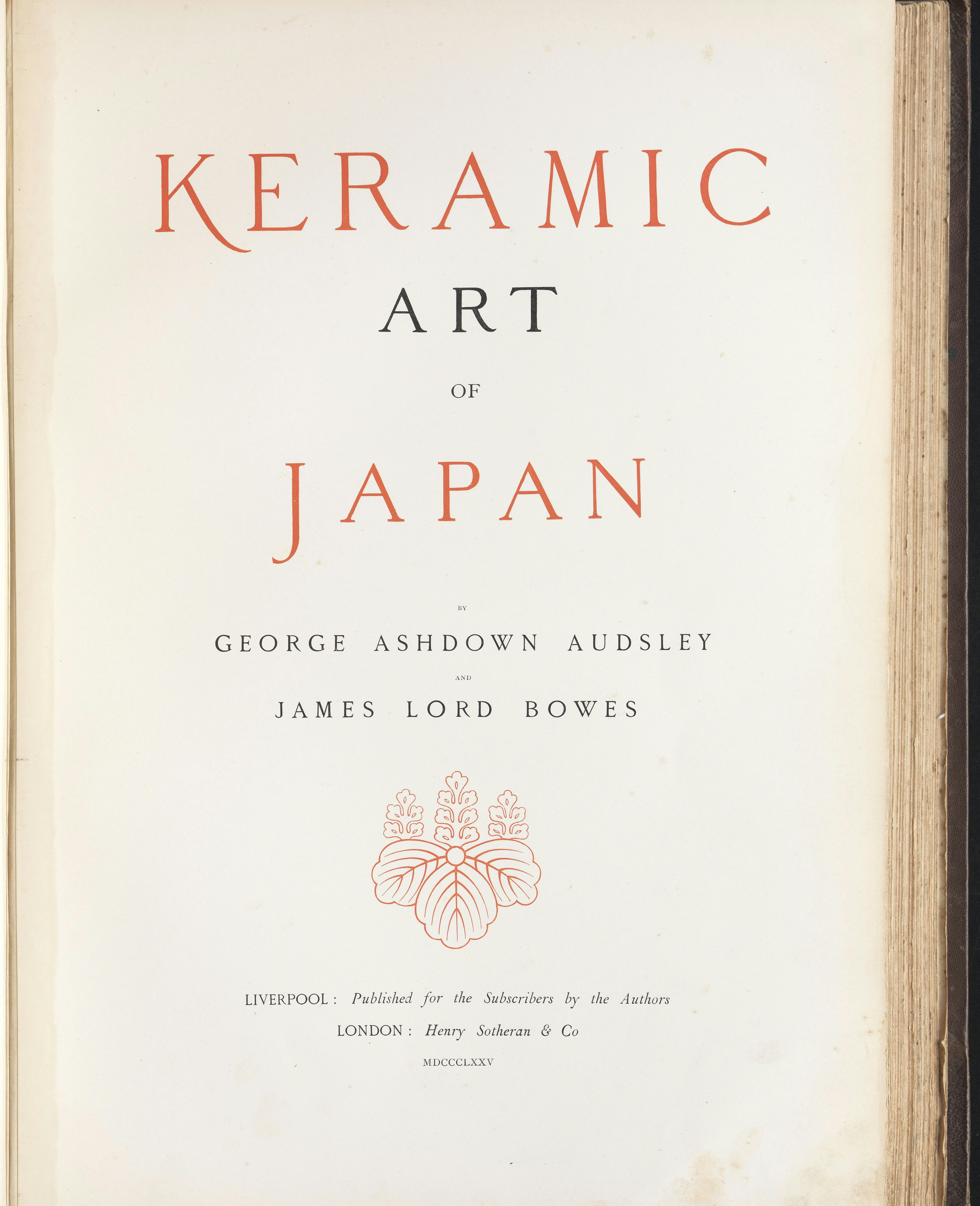
George Ashdon Audsley, James Lord Bowes, Keramic Art of Japan, Liverpool-London 1875 [1879], frontispiece, Ginori Museum Archive
Bibliography
- L’archivio storico Richard-Ginori della Manifattura di Doccia, curated by E. Bettio, O. Rucellai, «Quaderni di Archimeetings», n. 16, 2007
- O. Rucellai, Il fondo Ponti nell’Archivio del Museo di Doccia, in Gio Ponti. La collezione del Museo Richard-Ginori della Manifattura di Doccia, Falciano 2019, pp. 59-64