Dancing Faun
From the ancient marble sculpture in the Tribune of the Uffizi Galleries
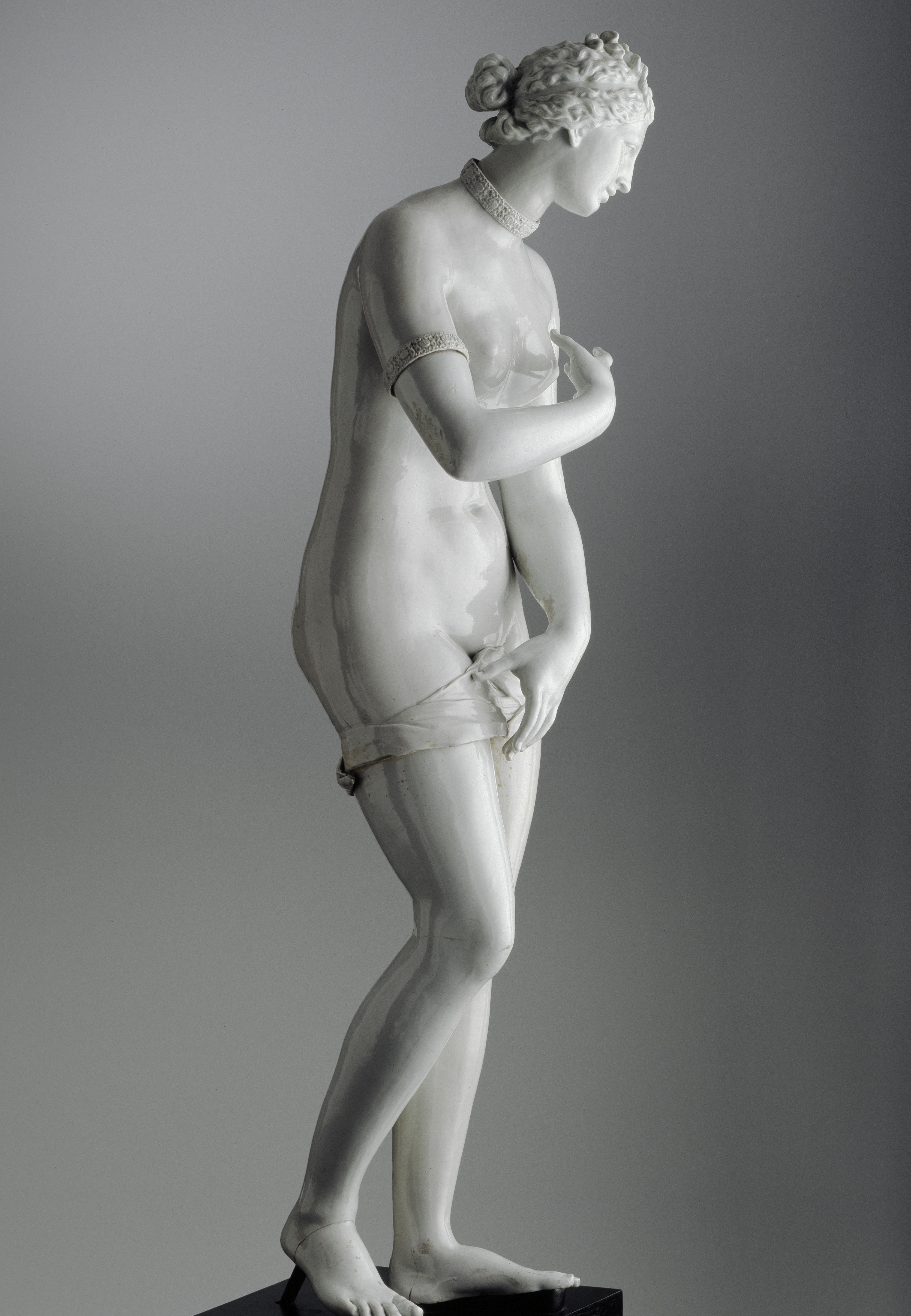
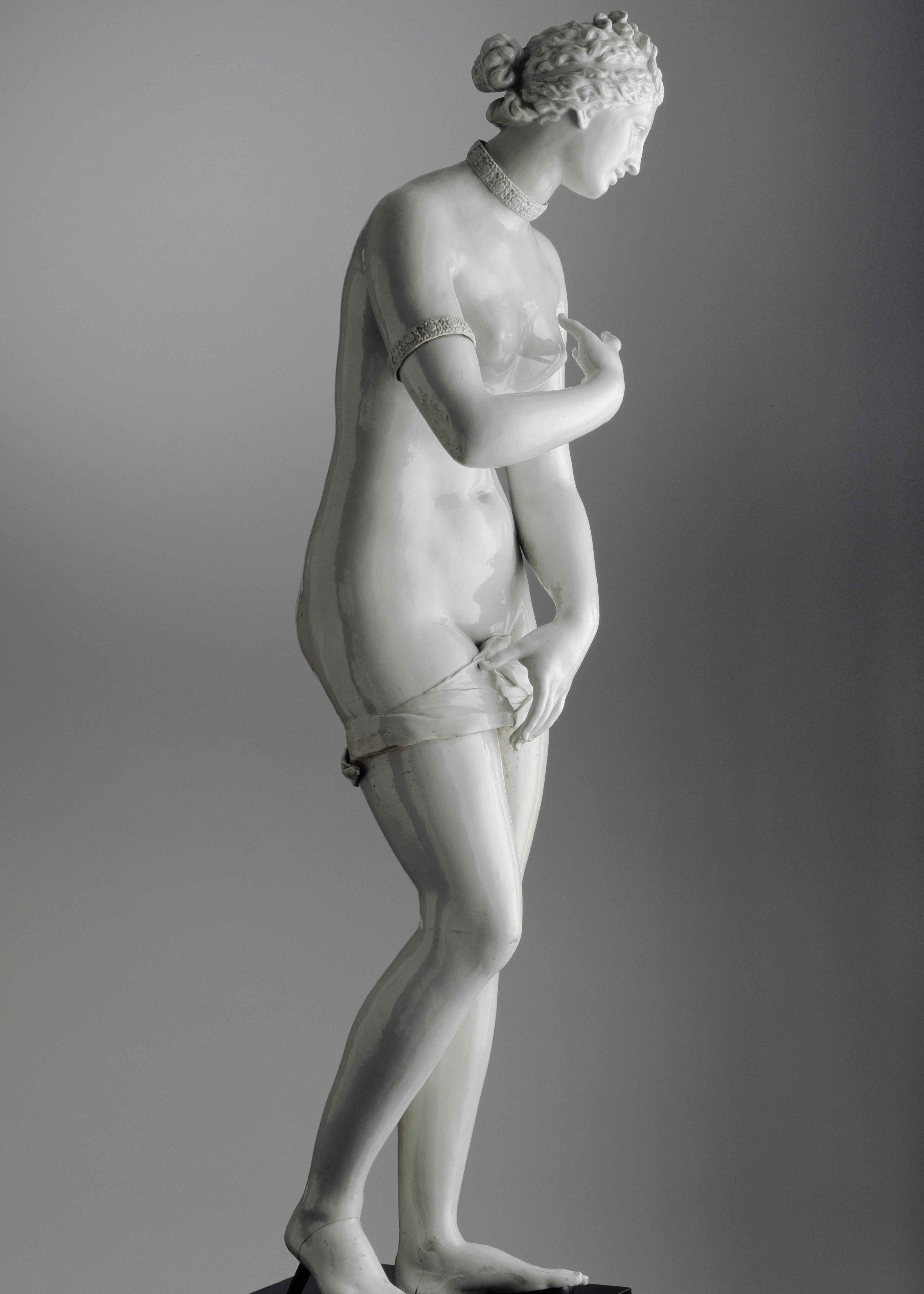
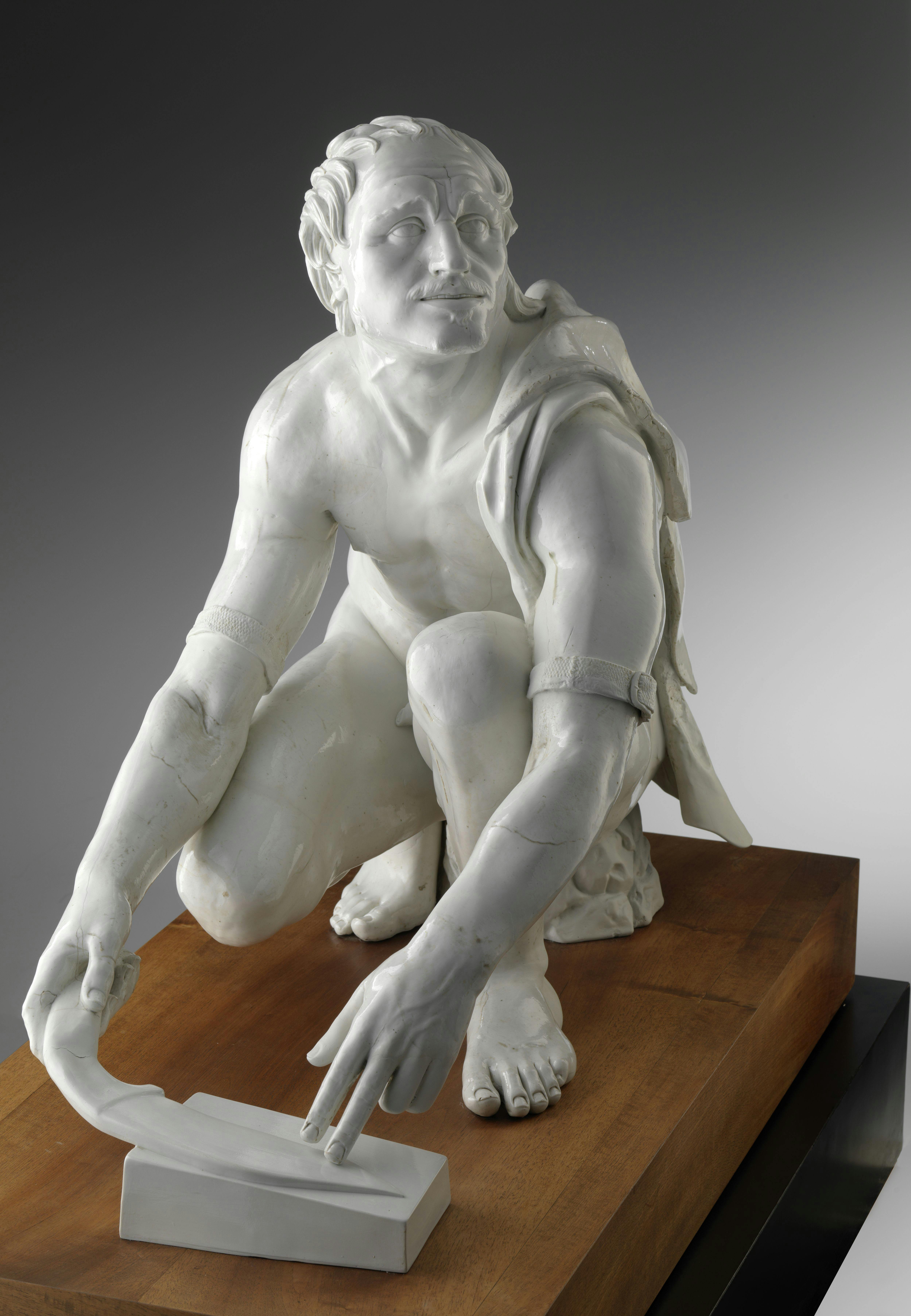
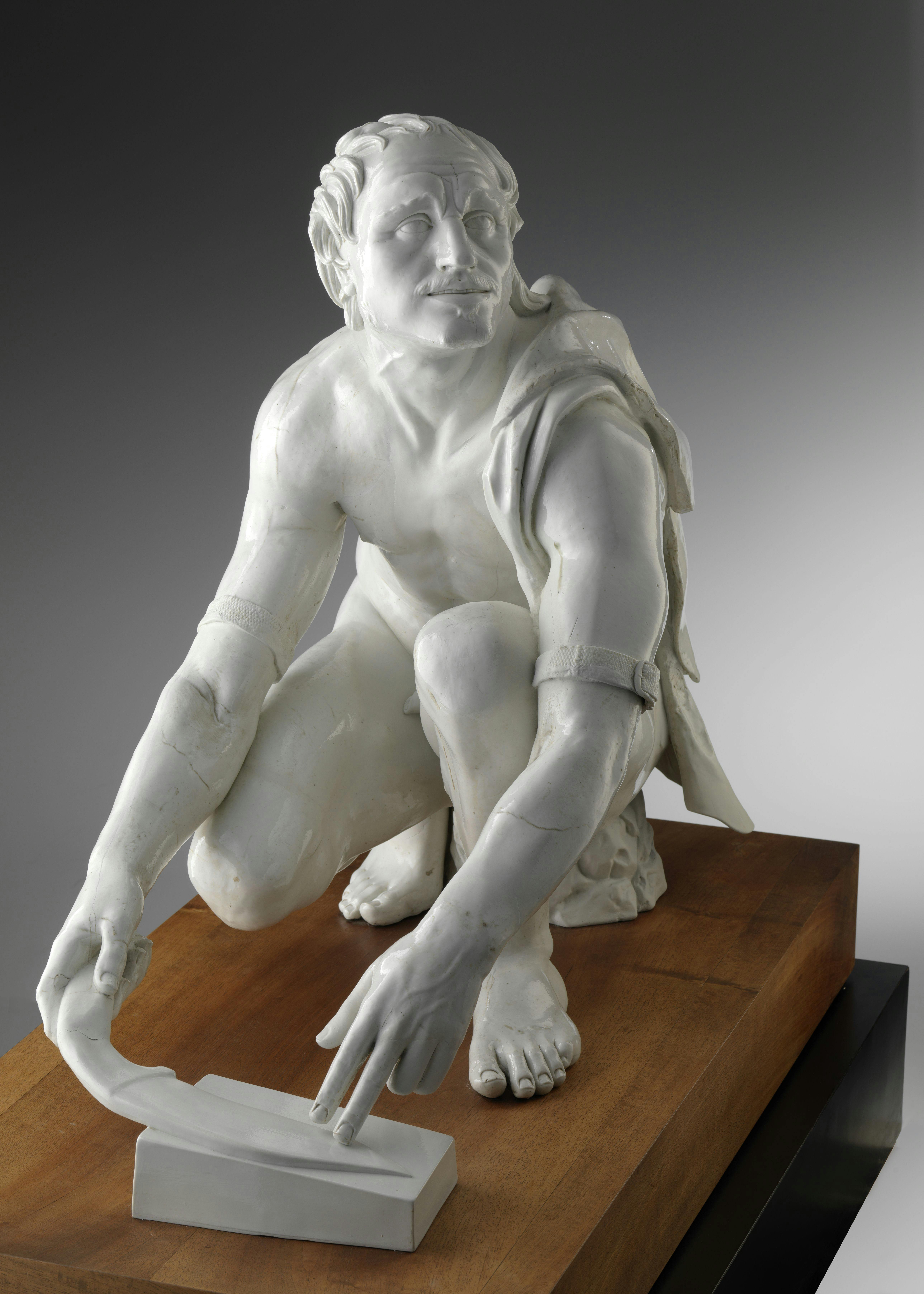
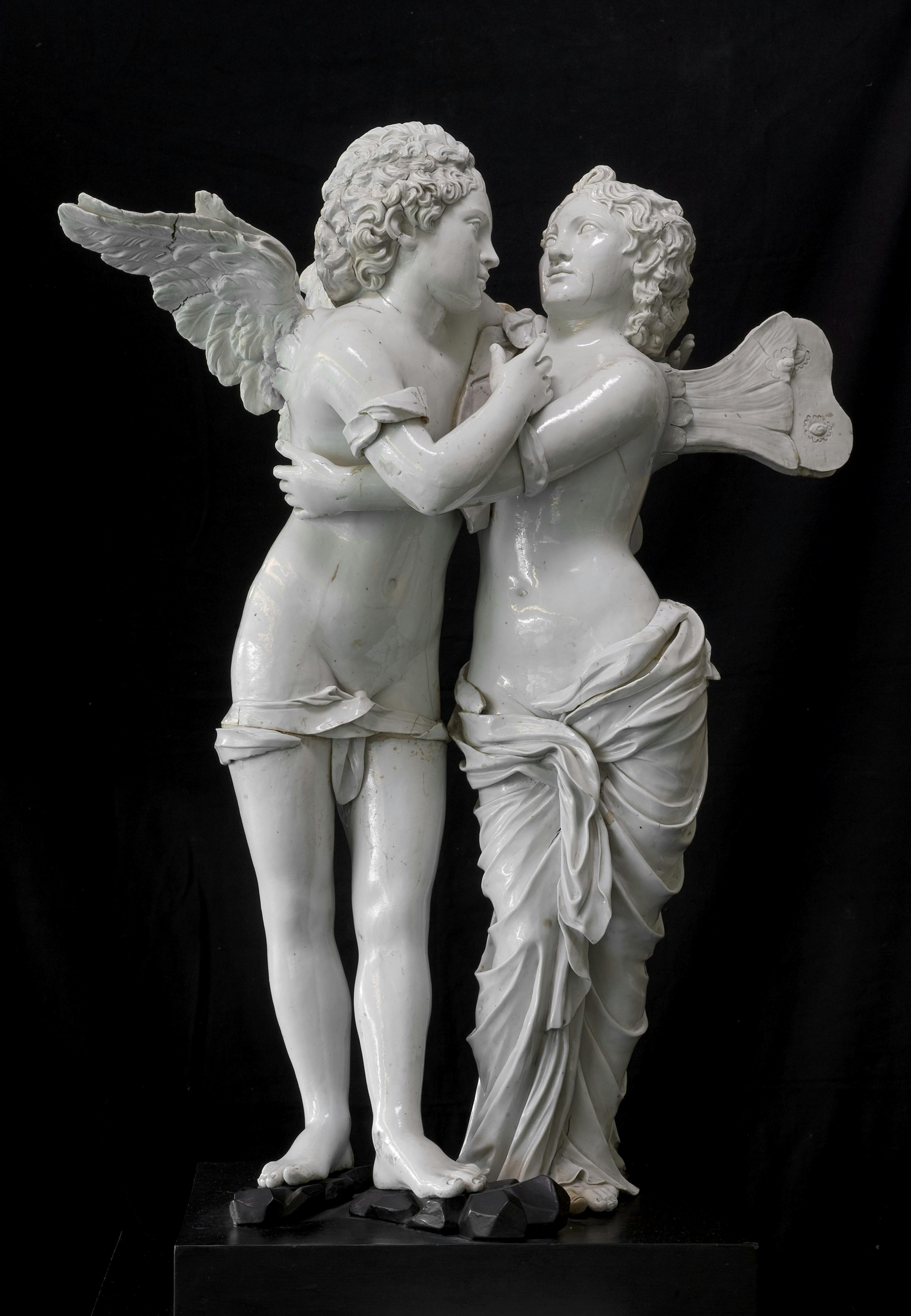
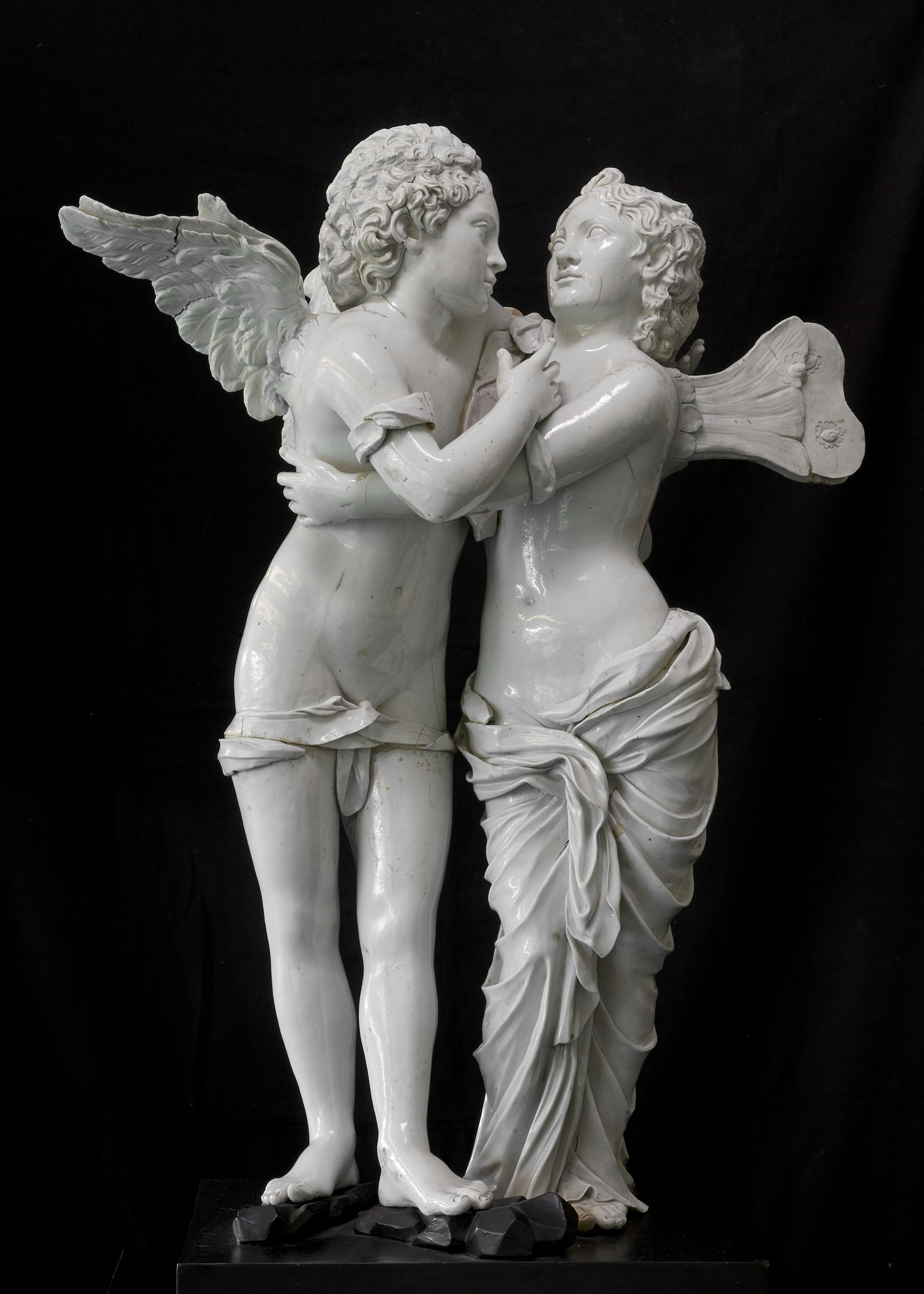
The plaster reproduces in reduced size the so-called Dancing Faun, a Roman copy of a Hellenistic original displayed in the Tribune of the Uffizi Galleries. Starting in the earliest years of activity, the Doccia factory produced true-to-scale porcelain reproductions of ancient marble sculptures from the Florentine Medici collections, such as the Venus de’ Medici, the Arrotino, and Cupid and Psyche.
The execution by the Ginori factory of the true-to-scale porcelain reproduction of the Dancing Faun is documented in 1748, most likely by the head modeller Gaspero Bruschi.
In the 18th century Inventory of models of the factory, five versions of this iconographic type are recorded, varying both in size and in materials (plaster and terracotta).
The production at the factory of reduced-size versions of this sculpture can be attributed to the genre of souvenirs with an antiquarian taste and were widely popular throughout the 18th century following the rise of interest in antiquity strongly influenced by the travellers of the Grand Tour.
Our specimen shows ‘cut’ breaks, so called because they were intentionally made by the artisans active at Doccia in order to use the various parts in creating the plaster moulds in sections which were necessary for its production in porcelain.
This type of breakage is also found on a smaller terracotta example, also in the Ginori Museum (inv. 1662), but not modelled in the manufactory, as is evident from the observation of the sections into which the figure was segmented.
The presence of several porcelain versions of the Faun in various sizes confirms what is stated in the aforementioned Inventory of models. Among these, notable is the one derived from a larger model compared to our specimen, currently on display at the Metropolitan Museum in New York (1987.293), while smaller ones, made both in the 18th and 19th centuries, are in the Museo Ginori (inv. 950, 5159).

- 01
The plaster reproduces in reduced size the so-called Dancing Faun, a Roman copy of a Hellenistic original displayed in the Tribune of the Uffizi Galleries. Starting in the earliest years of activity, the Doccia factory produced true-to-scale porcelain reproductions of ancient marble sculptures from the Florentine Medici collections, such as the Venus de’ Medici, the Arrotino, and Cupid and Psyche.
The execution by the Ginori factory of the true-to-scale porcelain reproduction of the Dancing Faun is documented in 1748, most likely by the head modeller Gaspero Bruschi.
In the 18th century Inventory of models of the factory, five versions of this iconographic type are recorded, varying both in size and in materials (plaster and terracotta).
The production at the factory of reduced-size versions of this sculpture can be attributed to the genre of souvenirs with an antiquarian taste and were widely popular throughout the 18th century following the rise of interest in antiquity strongly influenced by the travellers of the Grand Tour.
Our specimen shows ‘cut’ breaks, so called because they were intentionally made by the artisans active at Doccia in order to use the various parts in creating the plaster moulds in sections which were necessary for its production in porcelain.
This type of breakage is also found on a smaller terracotta example, also in the Ginori Museum (inv. 1662), but not modelled in the manufactory, as is evident from the observation of the sections into which the figure was segmented.
The presence of several porcelain versions of the Faun in various sizes confirms what is stated in the aforementioned Inventory of models. Among these, notable is the one derived from a larger model compared to our specimen, currently on display at the Metropolitan Museum in New York (1987.293), while smaller ones, made both in the 18th and 19th centuries, are in the Museo Ginori (inv. 950, 5159).
Characteristics
Bibliografia
- K. Lankheit, Die Modellsammlung der Porzellanmanufaktur Doccia: ein Dokument italienischer Barockplastik, München 1982, p. 105, 5:38;
- R. Balleri, Modelli della Manifattura Ginori di Doccia. Settecento e gusto antiquario, Roma 2014, pp. 395, 396, cat. 380.